The organisational structure of a data center

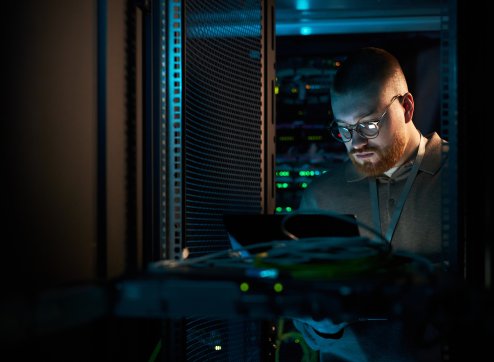
The operations manager of a large data center often has one of the most demanding jobs in the IT industry. He must not only coordinate thousands of machines but also lead teams of highly specialized professionals.
If an error occurs in one area, it can, in the worst case, bring global supply chains or streaming services to a standstill. A data center is a highly complex system that would quickly descend into chaos without a crystal-clear division of responsibilities.
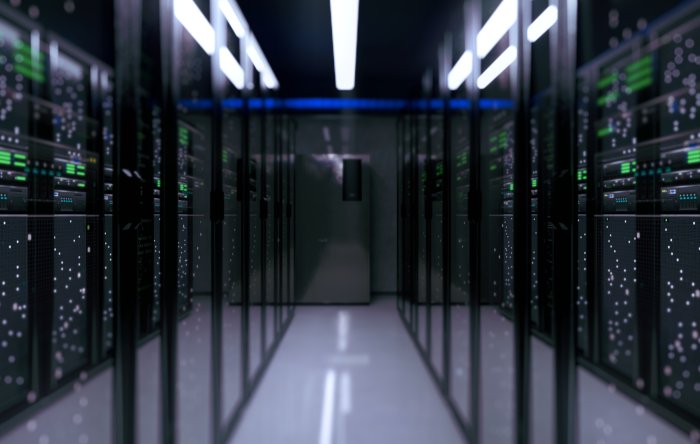
The challenge lies in synchronizing the physical world of hardware with the virtual world of data streams. It requires a strict separation combined with simultaneous interconnection of the core areas of systems engineering, system administration, and operations.
Only when these departments mesh like gears is maximum efficiency and reliability guaranteed. We take a look behind the scenes and show how order is created in the digital engine room.
Systems engineering as the foundation of physical infrastructure
The foundation of any digital operation is the hardware. The Systems Engineering department forms the interface between traditional information technology and the physical reality of electrical and power engineering. This is where people work who not only understand code but also know how to mount and cable a server in a rack.
What does an IT systems technician do?
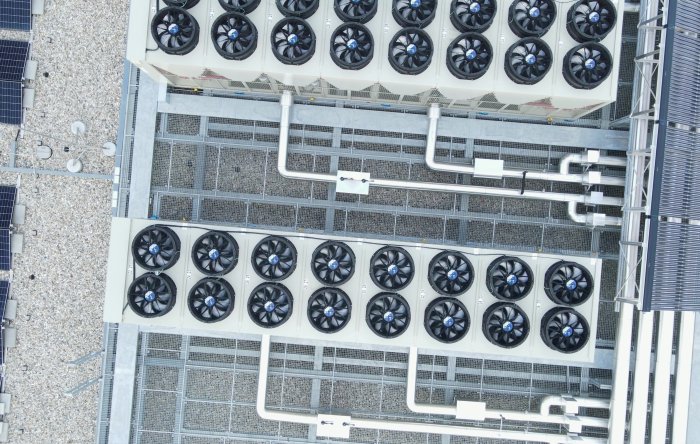
An IT systems technician in this area is responsible for installing and maintaining server systems as well as large-scale data storage systems. His work is hands-on and business-critical. He ensures that the hardware is running, cooled, and powered.
Core responsibilities include:
- Hardware installation: Installing servers, switches, and routers into the racks (“Rack & Stack”).
- Wiring: Structured installation of copper and fiber-optic cables (cabling) to ensure optimal airflow and clear organization.
- Maintenance: Physical replacement of faulty components, such as hard drives, power supplies, or fans.
In modern data centers, the boundaries between disciplines often blur. Experts in mechatronics and mechanical engineering work hand in hand with IT specialists to oversee the complex automation systems for building management and emergency power generators. Systems technology is thus the physical backbone of the data center.
System management and operations as digital conductors
While systems engineering provides the hardware, systems management and operations bring it to life. These departments take care of the logical layer of the infrastructure.
Their responsibilities are clearly defined:
- System management: It is responsible for installing, configuring, and maintaining operating systems (such as Linux or Windows Server). It ensures that the software on the servers remains up to date and secure, manages user permissions, and configures virtual machines.
- Operating: This is the watchful eye of the data center. In around-the-clock shifts at the Network Operations Center (NOC), operators monitor the networks and routers to immediately detect network congestion, latency issues, or outages. They are the first point of contact for alarms.
- Asset Management: Responsibilities often extend to managing peripheral devices and integrating mobile devices into the company network (MDM). Handling third-party providers for software licenses or specialised maintenance contracts also frequently falls within this area.
This ensures that all IT equipment and applications operate smoothly and that SLAs (Service Level Agreements) with customers are met.
Data security as a cross-sectional task
Security cannot be confined to a single department. Security measures must serve as a cross-sectional responsibility at every level of the organisation. In information technology, protecting personal data in accordance with the GDPR is now the top priority.
The systems engineering and administration teams work closely together to minimize security risks. These measures range from physical access control for the server room (biometric scanners and secure entry systems) to defending against cyberattacks that threaten data security.
An unsecured maintenance terminal or outdated firmware on a router can compromise the entire security posture. Therefore, close coordination between departments is essential to protecting critical infrastructure. Regular audits and penetration tests are standard practice.
The Human Factor: Training and Careers in IT
The demand for qualified professionals in data centers is huge and steadily growing. From traditional IT technicians to specialized engineers, talent is in high demand. The path into this future-proof industry often begins with an apprenticeship.
Career paths and entry-level opportunities
The apprenticeship to become an information technologist with a focus on systems engineering provides the ideal introduction. In vocational school, aspiring specialists learn the theoretical foundations (network protocols, electrical engineering, programming) while gaining hands-on experience with real systems in the workplace.
Institutions such as the WKO play an important role in providing career guidance and in ensuring the quality of training, whether in Vorarlberg, Vienna, or other federal states.
The abundance of apprenticeships in IT is a clear indicator of the industry’s growth. Those who enter the field have excellent career prospects in an environment that shapes our future. Specializations to become a cloud architect or a security analyst often come at the end of this path.
Applications and equipment
The range of technology to be supported is vast. It ranges from high-end clusters for AI workloads to simple projectors in the administration building’s conference room. A wide variety of applications must be supported.
A good organization ensures that clear responsibility is assigned for each asset. This is the only way to ensure that both critical systems and day-to-day office IT operate reliably.
We’ve got your system technology covered – PowerUP
A clear structure is the backbone of high availability. In the complex organization of your data center, we at PowerUP are responsible for the specialized power engineering and automation for your gas engines.
We are the partner that keeps your system technology running. With our maintenance solutions and spare parts, suitable for use in Jenbacher®, MWM® or MTU®, among other brands, we help ensure the stability of your power supply. These are not original parts from the manufacturers mentioned, but solutions specially developed by PowerUP.
We free up your team to focus fully on data management and system administration. Technology is our driving force; efficiency is our focus.