60,000 operating hours reached? Why a major overhaul of your gas engine now ensures CHP uptime

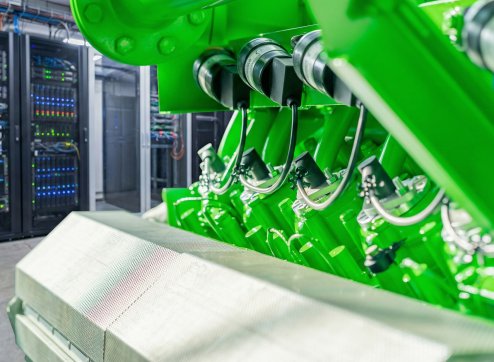
It’s that one moment every data-center asset manager knows and secretly dreads. A look at the maintenance schedule or the digital dashboard confirms the premonition: the operating-hours counter is inexorably approaching the critical threshold of 60,000 hours.
The gas engine, the heart of your emergency backup power or continuous-load support, has reliably delivered power for years. But now you’re feeling the pressure. With each additional hour of operation, the statistical likelihood of failure increases, while efficiency declines and oil consumption gradually rises.
In an environment where uptime is the most valuable currency, you now face a complex decision. You are in a “world of scarcity.” New engines have astronomically long lead times, the CAPEX budget is tightly constrained, and a prolonged plant shutdown is simply not an option.
The responsibility falls on your shoulders to find a solution that combines technical reliability with economic prudence. This is precisely where a strategic alternative to buying new opens up — one that is far more than a mere repair.
The decision between replacement and repair based on current value
As a first instinct, many operators tend to replace the old unit entirely to play it safe. However, economically and environmentally, this often proves a dead end.
A massive cast block loses almost no material even after years in continuous service. Scrapping it would be a waste of valuable resources.
A professional overhaul of a gas engine starts right here. It is not a simple repair, but a complete rejuvenation for your machine.
The remanufacturing process technically restores the engine to zero condition — or even beyond. For you as the person responsible, the benefits are obvious:
- Massive cost savings: An overhaul often costs only 50–60 percent of a new device, leaving your budget available for other IT infrastructure.
- Time savings: While new engines can have delivery times of up to a year, an overhaul solution is often achievable within days or weeks.
- Sustainability: By continuing to use the massive main engine, you drastically reduce the carbon footprint of your data center.
It’s about preserving the value of your asset rather than writing it off. A complete overhaul of a gas engine provides precisely this flexible, fast solution to safeguard your critical infrastructure.
Options compared: from short-block to genset exchange
If the decision to proceed with an overhaul has been made, you must determine the appropriate scope of intervention. Not every system requires the same treatment. We distinguish three main strategies:
Genset replacement (the complete solution)
In this approach, the motor, generator, and frame are replaced as a single unit. That sounds like a clean “plug-and-play” solution, but in reality it is often a logistical nightmare. Bringing units weighing several tonnes into existing buildings frequently requires cranes, roof openings, and extended downtime that is hardly tolerable in an operational data center.
The Long Block
Here you receive an engine assembly with preinstalled cylinder heads and control components. This offers a high level of safety thanks to pre-assembly in a clean room, but it is more expensive.
For many scenarios in which peripheral components—such as turbochargers or mixture coolers—still have substantial remaining service life, this is often “too much of a good thing.” You’re paying for components you could actually continue to use.
The Gas Engine Short-Block Service (The agile alternative)
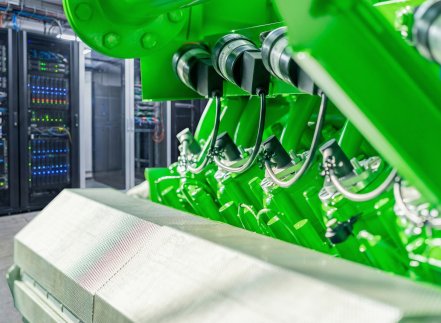
Here we focus on the essentials: the crankcase, crankshaft, pistons, and connecting rods. These core components are replaced, while functional ancillary components from your existing engine are retained.
This not only reduces material costs, but also significantly streamlines logistics. A short block often fits through standard industrial doors and can be manoeuvred with pallet trucks, making complex structural alterations unnecessary.
Why short-block service for gas engines is often the smartest solution
For data center operators, time is the most critical factor. Each day a generator set is unavailable reduces redundancy and increases risk. The gas-engine Short Block Service excels in speed and cost-effectiveness.
Because at PowerUP we often have common models in stock or offer them in our exchange program—including those suitable for use in Jenbacher®, MWM®, Caterpillar®, MTU® or MAN®—you avoid the months-long waiting times associated with a new order. These components are specially developed by PowerUP and are not original parts from the engine manufacturers mentioned.
At the same time, you achieve substantial savings. Investment costs (CAPEX) are lowest with this option, because you only pay for the actual wear core. You make optimal use of your equipment’s underlying structure and avoid unnecessary waste. Our technicians carry out a precise on-site conversion so the interface between “old” and “new” works perfectly. In this way, you can turn an at-risk asset back into a reliable performer in a very short time.
Increase efficiency through technology by upgrading rather than simply repairing.
A general overhaul is far more than a mere preservation measure. It marks the ideal time not only to restore the technological status quo but also to proactively elevate the plant’s performance to a new level.
Why should an engine still be running today with the same parameters it used a decade ago, when engineering has advanced?
Technical progress makes it possible, during repair, to integrate components that are superior to the original parts:
- Thermodynamic optimization: New cylinder-head designs improve heat dissipation and enhance the combustion process that determines efficiency.
- Extended service life: Advanced spark plug technologies provide more stable combustion and reduce maintenance intervals.
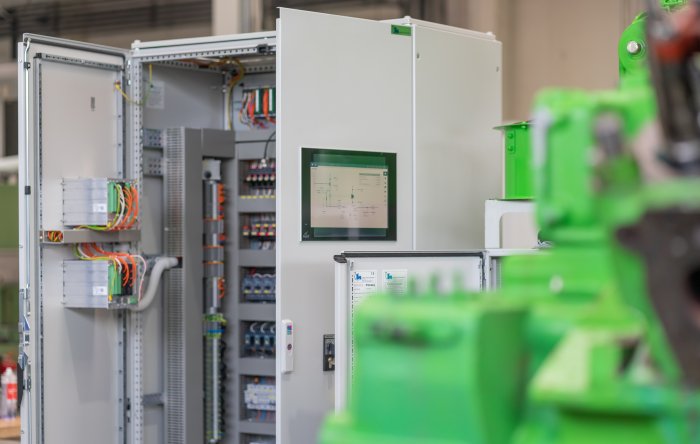
- Digital transparency: Replacing outdated controllers with modern control systems enables more precise motor control and lays the groundwork for predictive remote maintenance.
The result of this technological rejuvenation is a unit whose post-service efficiency often exceeds the level recorded at initial commissioning. This permanently reduces operating costs (OPEX) and prepares the plant for future challenges, such as fluctuating gas quality or stricter emissions requirements.
Safety through precise logistics and validation
Trust is good, but data is better — especially when it comes to a data center’s security architecture. Guarantees to supervisors or customers are based on measurable reliability. Therefore, an overhauled unit must not leave the workshop without a rigorous reality check.
On high-performance test benches, load transients and full-load operation are simulated exactly as they would occur during a power outage. Oil pressure, temperatures, and performance curves undergo rigorous validation.
Only when the unit proves it can safely handle the full (block) load is its operational readiness certified. The result is not a “repaired part” but a tested powerhouse with a warranty that restores the necessary redundancy.
Strategic partnership for a second life
Future-proofing infrastructure isn’t a gamble; it’s a matter of careful calculation. Opting for a comprehensive overhaul restores an aging asset to its role as a guarantor of safety and efficiency.
This is where PowerUP serves as the specialized partner that enables this transformation. Instead of one-size-fits-all replacement solutions, the focus is on a tailored analysis of your fleet to define the optimal roadmap—whether a short block or a technical upgrade. Use this expertise to extend the investment lifecycle and give your engines a second, more powerful life.