How Remote Maintenance Eliminates Unplanned Downtime in the Data Center

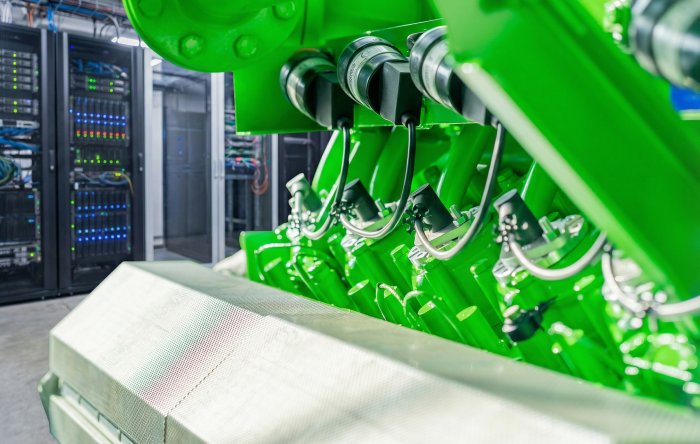
It’s 3 a.m. Silence fills the control room; only the hum of the fans can be heard. Suddenly, a shrill alarm rips the operator out of his routine. A warning message flashes red on the monitor. One of the critical gas engines has failed. The error code is cryptic, and the manual offers no clear solution.
At this point, a race against time begins. On-site personnel are unsure whether a restart is safe or would cause further damage. In the traditional scenario, an external on-call technician would have to be woken, get in their car, and drive to the site. Critical hours pass before they arrive, during which the data center’s redundancy is compromised.
The “Mean Time to Repair” (MTTR) is soaring. But there is a faster way. Remote maintenance of the gas engine brings the expert to the machine virtually instantly and can mean the difference between a brief malfunction and a catastrophic failure.
Why travel is the most expensive part of a repair
If you analyze the classic service process, it quickly becomes clear where the biggest bottleneck lies. It’s not the repair itself but the logistics leading up to it: the phone call, scheduling the appointment, and, above all, the technician’s travel time—all of which consume valuable time.
Faster resolution thanks to Remote Service
Modern remote service concepts drastically shorten this process. The diagnosis is not performed on-site; it begins immediately after an error occurs. In many cases, the problem can be resolved remotely through a guided reset or by adjusting parameters.
Should an on-site visit still be necessary, the technician will already know exactly what to expect before leaving. They pack the correct spare part, thereby significantly increasing the first-time fix rate. The risk of the technician arriving and discovering that they are missing a special tool is eliminated.
Technical insights into the engine’s condition using virtual diagnostics
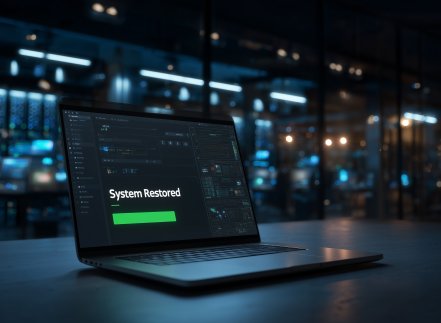
Technically, remote maintenance is a secure tunnel straight into the brain of your engine. Our experts access control systems such as AORA or EDI over an encrypted VPN connection. They can see far more than just the current error code.
The following data points allow us to make an accurate assessment of the situation:
- Live values: We monitor parameters such as ignition voltage, boost pressure, and oil temperature in real time.
- Historical data: Reviewing the records from the hours leading up to the failure often reveals the root cause.
- Cylinder-specific details: Deviations in the exhaust gas temperatures of individual cylinders indicate localized problems.
- Status messages: We don’t just see the primary fault; we also see upstream warnings.
Diagnosis vs. Troubleshooting
A distinction is made between purely remote diagnosis for analysis and active remote troubleshooting. In the latter case, after authorization by the on-site operator, experts can actively intervene in the control system to reconnect the plant to the grid.
Well-informed decisions based on valid data
Without remote access, the error description given over the phone often resembles a guessing game. Statements like “The engine makes strange noises” or “it’s running roughly” are not very helpful to support staff. The expert has to speculate and often heads out on a hunch.
With integrated remote maintenance, the PowerUP engineers see the physical reality based on hard data. They can immediately tell whether a cylinder head has cracks because water is evaporating in the combustion chamber, or whether only a single sensor is giving false readings.
This data-driven precision avoids unnecessary inspection visits that only add cost and fail to solve the problem. We replace flying blind with clear facts.
Ensuring cybersecurity for remote access
The term “remote access” initially raises skepticism among many security leaders (CISOs) in the data center. The fear of open ports and entry points for hackers is understandable. However, modern industrial solutions are nothing like insecure TeamViewer sessions.
The security concepts are based on outbound connections over encrypted VPN tunnels, so no firewall ports need to be opened. Two-factor authentication ensures that only authorized personnel can gain access. In addition, permissions can be assigned on a granular basis.
Often, access during normal operation is limited to “read-only” and is only enabled by the customer for a limited period in case of an emergency. Such a monitored, patched connection is often more secure than an isolated offline system that hasn’t received security updates in years.
Support from the PowerUP Competence Center
Data alone won’t fix an engine. It takes people who can interpret it. This is where the PowerUP Competence Center comes in. If you contact us, your call won’t end up in an anonymous call center reading from scripts.
You will speak directly with experienced engineers and technicians who are familiar with Jenbacher® and MWM® units. Our team monitors fleets worldwide and can often provide proactive guidance.
If we see that the differential pressure across the oil filter is slowly increasing, we will inform you so the filter can be replaced during the next scheduled maintenance window. This prevents a wear part from causing a failure.
Connect your assets with our expertise
In a connected world, distance hardly matters anymore. Expertise no longer needs to be physically on-site to solve problems. At PowerUP, we offer you the opportunity to bring our experienced technicians into your team virtually to drastically reduce response times.
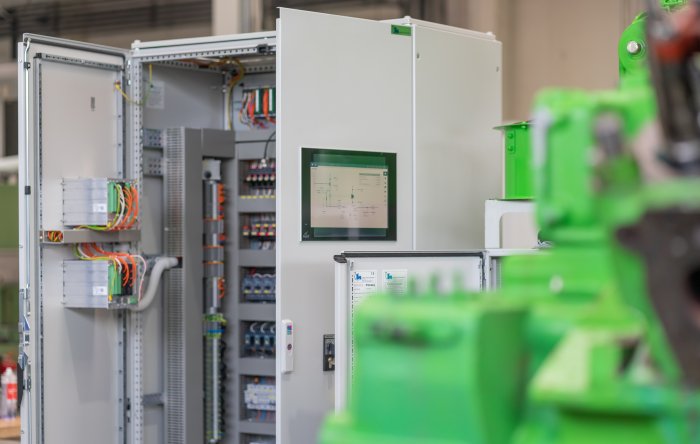
Through our retrofit controls—which, among others, are suitable for use with Jenbacher®, MWM® and other makes—and the corresponding remote maintenance contracts, we establish a direct connection to your assets. These components are PowerUP’s specially developed alternatives and are not original parts from the respective engine manufacturers.
We analyse and diagnose remotely, supporting you in quickly identifying the causes of malfunctions. Use this digital leased line to keep downtime as low as possible. For us, technology is our driving force and efficiency our focus.
Contact us for a no-obligation consultation to learn how remote support can accelerate your maintenance.