The role of gas engines: Why stationary CHP systems are the foundation of data center power supply

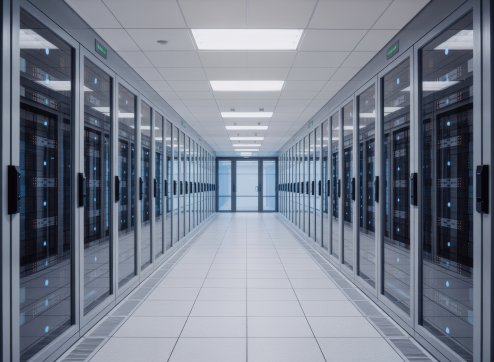
It is a weighty responsibility. As a data center manager, you do not just guard servers; you safeguard society’s digital memory. Whether it is the sensitive personal data of bank customers, critical infrastructure, or the enormous computational loads for artificial intelligence — everything hangs by a thread: the power supply.
A single unplanned power outage can cause not only potential data loss but also reputational damage running into the millions.
But the foundation is shaky. The public power grid in Germany and Europe is in upheaval. The massive feed-in from intermittent renewable energy sources has created volatility that was unimaginable ten years ago. Anyone who relies solely on supply from the substation today is playing with fire.
Achieving a truly continuous power supply requires a rethink. It means moving away from the passive consumer and toward the active producer, with an infrastructure that remains stable even when the lights go out.
Challenges posed by grid fluctuations in the data centre’s power supply
The demands placed on modern data centers are severe. Standards such as the Tier Classifications of the Uptime Institute require fully redundant power supplies for Tiers III and IV. But external networks often fail to keep up. Voltage fluctuations and momentary outages are on the rise.
A mere backup power system that only starts in an absolute emergency is insufficient. To reliably reduce downtime to zero, the on-site power supply must be able to sustain the load continuously.
The data center becomes an island of stability in a turbulent sea. Transformers and switchgear must be designed not only to meet today’s power demands but also to absorb tomorrow’s peak loads.
Interaction between UPS systems and standby generators
The security architecture consists of two lines of defense. The first is the uninterruptible power supply (UPS). Modern UPS units and systems are technical marvels that smooth out millisecond-scale fluctuations and immediately take over the load in the event of a blackout. But their batteries are not a permanent power source. They buy you time – often only a few minutes – to activate the second line.
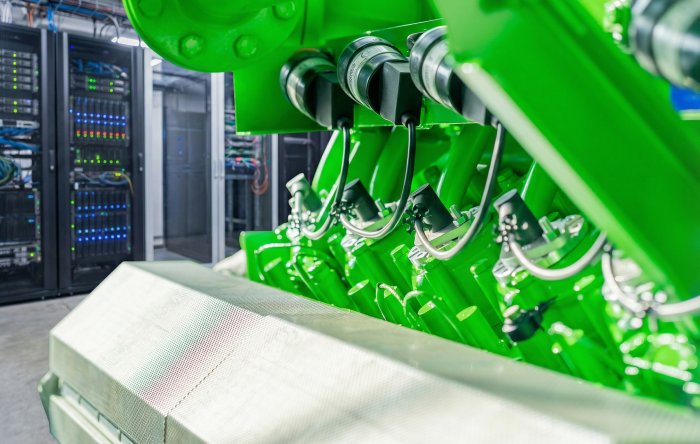
This is where the engines come into play. Whereas simple emergency generators were once kept in the basement, modern systems rely on advanced gas engines or combined heat and power (CHP) plants. They must synchronize in a matter of seconds and assume the full load of the IT infrastructure and cooling systems.
Why stationary CHP systems are replacing diesel generators
For decades, diesel generators were the standard. However, they pose problems that are significant in modern operations: storing large quantities of fuel is a risk (“diesel pest” and fire-safety concerns), and in a crisis tank trucks are often caught in traffic congestion. In addition, emissions regulations make operating them in urban areas difficult.
Gas as a Strategic Energy Source
The trend is clearly toward gas engines. The supply via the underground natural gas network is regarded as one of the safest energy sources overall, unaffected by weather or traffic.
In addition, gas engines generate electricity much more cleanly. They are the ideal bridging technology, as they run on natural gas today and are increasingly compatible with biogas or hydrogen.
Efficiency boost for the PUE: power and cooling combined
The decisive advantage of a CHP over an emergency diesel generator is its energy efficiency. A diesel engine wastes heat; a CHP uses it.
- Dual use: The engine supplies power to each server rack. At the same time, the thermal energy is used to provide cooling via absorption chillers.
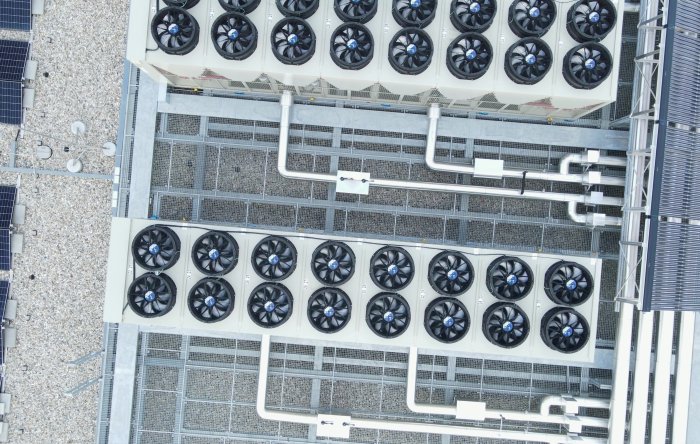
- PUE optimization: As the cooling system draws less power from the grid, the PUE (Power Usage Effectiveness) drops significantly. This makes the data center more energy-efficient and lowers operating costs.
Scalable energy solutions for AI applications and cloud services
The boom in cloud services (such as Microsoft’s Azure) and data-hungry AI are driving energy consumption to new heights. A highly available data center must be able to scale.
Here, modern gas-engine solutions prove superior. They are scalable systems. Container solutions (such as PUPGEN) allow modular increases in output without having to alter the existing building envelope. This lets the backup power supply grow incrementally to meet customers’ requirements.
Technical support for resilient infrastructure
A data center is only as strong as its weakest component. We understand that your power supply allows no technical compromises.
By using high-quality spare parts and targeted upgrades, we help ensure that your units operate reliably, both mechanically and electrically. Our solutions are suitable for use in Jenbacher®, MWM®, Caterpillar®, MTU® or MAN® engines, among others. These are spare parts specially designed by us and not original parts from the manufacturers mentioned.
Our modular container solutions give you the flexibility to reliably expand your capacity as needed. Invest in technology built to last. Technology is our driving force, and efficiency is our focus.