Second Life: Purchase, Sale, and Refurbishment of Data Center Gas Engines

As an asset manager in a growing data center, you often face a dilemma: the sales team reports demand for additional server capacity, customers are pressing for rapid deployment, but the power infrastructure is lagging behind.
If you order a brand-new large engine today, you often face delivery times of over 12 months. That’s an eternity in the digital era. At the same time, purchasing new units ties up enormous capital (CAPEX) that is then unavailable elsewhere.
On the other hand, some sites are being modernized or decommissioned. They contain fully functional engines that are often prematurely written off as scrap. It’s time to reevaluate the value of used gas engines.
The secondary market offers smart solutions for both parties. Whether by selling to raise capital or by purchasing refurbished aggregates as a readily available, cost-effective alternative to new construction.
Why the market for used gas engines is emerging as a strategic alternative
The purchase of used capital equipment was long frowned upon in the critical environment of data centers. However, the reality of global supply chains has forced a rethink. Availability has become the new currency.
While waiting for a new engine, a used generator set can often be delivered and installed within a few weeks. This allows operators to respond flexibly to peak loads or to undertake temporary projects that would be uneconomical with new installations.
In addition to speed, cost is the most compelling argument. Purchasing a used engine often costs 40 to 50 percent less than a new one. The budget freed up can be invested in efficiency measures or in IT infrastructure. Here, flexibility is the key to competitive advantage.
Converting decommissioned engines into liquid capital
Let’s look at the flip side of the coin. You may be upgrading your site to larger blocks or consolidating several small data centers into a single large campus. The old engines are now in the way and are adding to your storage costs. But to the right buyer, these machines are pure gold.
The purchase of a gas engine by specialized dealers converts your tied-up capital back into liquidity. Not only the year of manufacture is important for the valuation.
What matters is a complete service history, the actual number of operating hours, and the condition of core components such as the crankshaft and engine block. Those who have kept their maintenance records in good order command significantly higher prices here.
PowerUP operates in this market as a technical service provider that evaluates and purchases used cores (engine cores) from manufacturers such as Jenbacher®, MWM®, MTU® and others, with the intention of reintroducing them to the market. However, this is not an official partnership with or authorisation from the manufacturers mentioned.
Cost efficiency through refurbishment and like-new quality
There’s a world of difference between an engine bought “used” (as-is) and a refurbished unit. Buying second‑hand outright carries risks, since internal wear is often hidden. A professional CHP refurbishment entirely eliminates that risk.
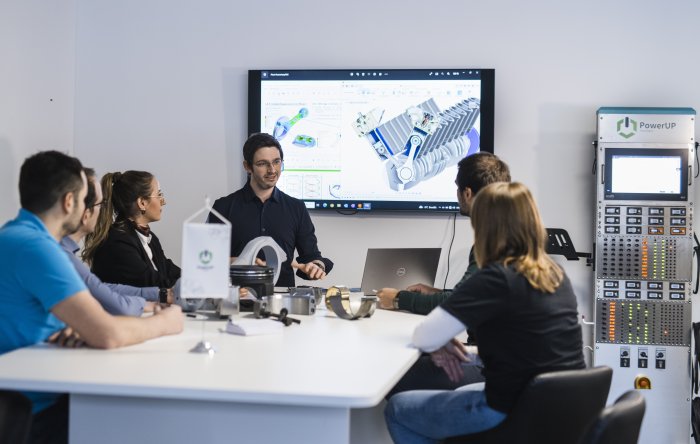
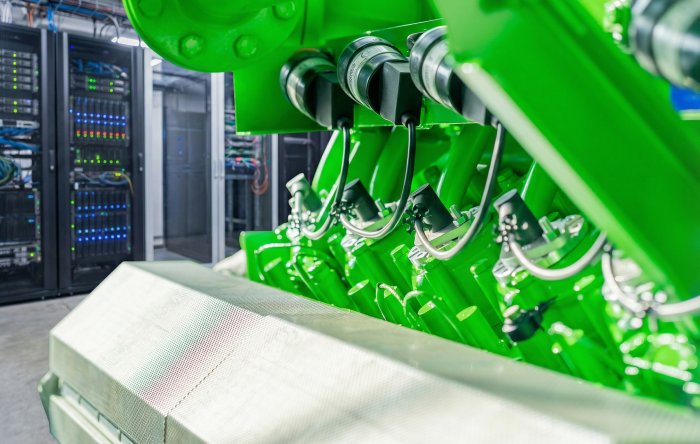
In this process, the engine is disassembled into its individual parts. The solid cast block, which experiences virtually no wear, serves as the foundation. All moving parts, such as bearings, pistons, cylinder liners, and cylinder heads, are replaced or refurbished.
The Performance of a Second-Life Motor
The result is an engine that has been technically reset to zero operating hours. It offers the same expected service life and reliability as a new machine but costs only a fraction of the price. Full-load runs on a test bench ensure that the performance curve matches factory specifications.
Circular Economy in the Engine Room: A Sustainable Business Case
The term “Green IT” usually refers to the power consumption of servers. But the grey energy in the infrastructure is also relevant to the ESG balance. The production of a tonne‑heavy cast‑steel engine block consumes enormous amounts of energy and produces large quantities of CO₂.
By refurbishing this block instead of melting it down and recasting it, you actively conserve resources. This circular economy in the engine room is a compelling argument in any sustainability report.
This shows that your data center not only operates efficiently but also manages materials responsibly. Sustainability thus becomes a solid business case rather than just an image concern.
Checklist: What to look for when buying used equipment
Purchasing used equipment requires caution. To avoid unpleasant surprises, check the following points.
- Complete history: Is the service booklet available, and have all service intervals been observed?
- Endoscopy report: A current inspection of the combustion chambers reveals the condition of the cylinder liners and valves.
- Oil analyses: Historical oil samples reveal bearing wear.
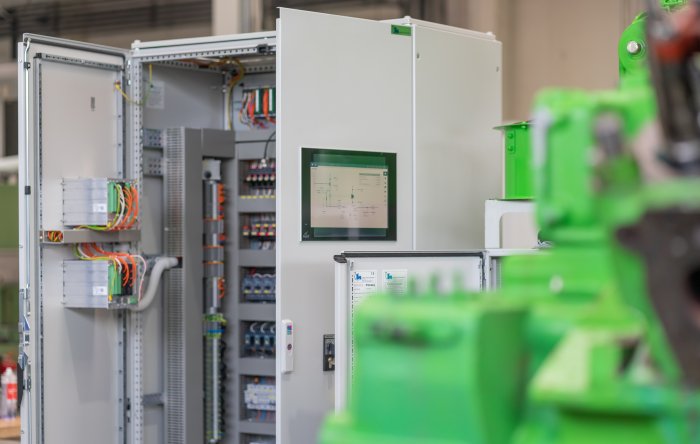
- Compatibility: Do peripheral systems, such as controls and cooling, fit your existing infrastructure, or will costly modifications be required?
- Warranty: Does the seller offer a warranty on the work performed?
Efficiently complete the lifecycle of your motors with PowerUP
A used gas engine is a valuable resource for economically minded operators. In this process, we see ourselves not only as an intermediary between buyer and seller, but above all as a technical partner in preserving value.
Whether you want to free up space by selling decommissioned equipment or are looking for a refurbished alternative that’s available promptly, we professionally match these needs.
Through comprehensive inspections, our experts ensure that every unit leaves our facility in technically flawless condition. We use spare parts specifically developed for your engine types to maintain high performance and reliability even during the unit’s second service life.
Tap into these existing market values and rely on our experience—technology is our driving force and efficiency our focus.