Know-how for technicians: PowerUP in-house training courses for trouble-free data center operations

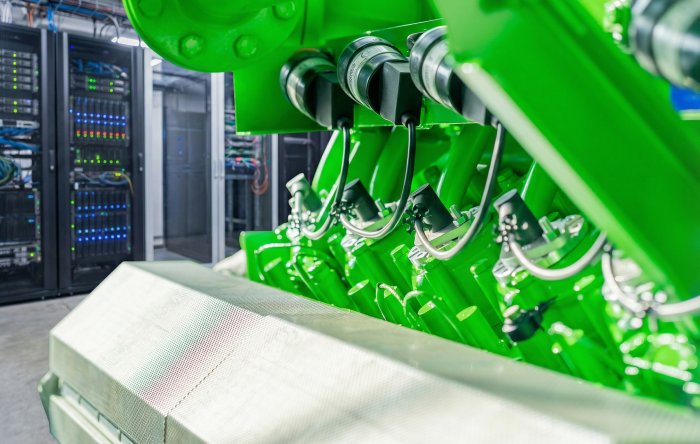
Imagine your service technician. He stands in front of a 20-cylinder unit, a colossus of steel and electronics that must secure the power supply of an entire data center in an emergency. He hears a faint knock and sees an error message on the display he’s never seen before.
At this moment, enormous pressure weighs on his shoulders. Should he intervene? And if so, how? Or could he, by making the wrong move, risk causing a standstill?
The reality in many companies is sobering: machines are becoming increasingly complex, manuals are growing thicker, but there is no time for proper training. “Learning by doing” is an incalculable risk when millions are at stake and critical infrastructure is involved. True security does not come from luck but from competence.
A comprehensive gas engine technology training conducted on-site at your facility turns uncertainty into confidence and is therefore one of the most important investments in the availability of your data center.
The risk of half-knowledge: why ‘trial and error’ in the data center is not an option
A modern combined heat and power (CHP) unit or emergency power generator, for example from Jenbacher®, MWM®, Caterpillar® or other manufacturers, is a highly precise system. Our training courses are suitable for working with these engines, but they are not training provided by the original manufacturers.
The interaction of ignition timing, air-fuel mixture formation, and exhaust-gas aftertreatment leaves no room for guesswork. A small adjustment error in the control unit can cause the engine to fail to synchronize in a critical situation or — worse — suffer catastrophic mechanical damage.
The cost of such an operator error often far exceeds the cost of training. It is a fallacy to believe that studying the operating manuals is sufficient to master the complex interactions between thermodynamics and electrical engineering in practice. Anyone who saves here is compromising operational safety.
Increase availability through qualified training programs
Knowledge is the most effective maintenance tool. A trained technician doesn’t just rely on red warning lights. He develops an intuitive feel for the machine. He “hears” when valves don’t close properly, and he “feels” when vibrations fall outside the normal range, long before the sensors sound the alarm.
This competence drastically reduces MTTR (Mean Time To Repair). If you don’t have to spend hours searching for the fault but instead understand the cause-and-effect chain, you can fix faults faster or even prevent them. The training thus becomes a direct driver of uptime.
From foundational knowledge to expert diagnosis
Our training courses are not off-the-shelf but modular, designed to meet technicians where they are. The goal is to take them from mere users to diagnosticians.
The content covers all the critical areas:
- Technology fundamentals: Understanding the mechanical and thermodynamic processes in gas engines.
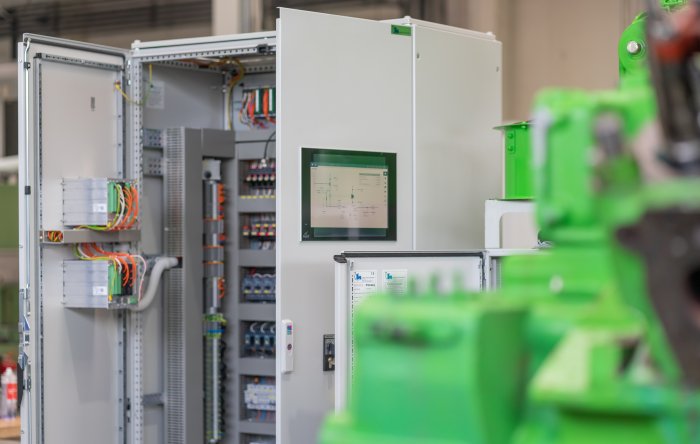
- System competence: Proficient use of modern control systems (such as AORA or EDI) and interpretation of real-time data.
- Practical diagnostics: Systematic troubleshooting, using multimeters and oscilloscopes, and correctly performing maintenance tasks (spark plug replacement, valve clearance adjustment).
Strengthening staff’s ability to act with confidence
Alongside the technical component, there is an often underestimated psychological aspect. Many technicians—understandably—have great respect for the massive equipment, the high gas pressures, and the high voltages of the ignition systems. Uncertainty breeds stress, and stress leads to mistakes.
Professional training in gas engine technology alleviates these fears. Those who know exactly which safety procedures (lockout/tagout) are required and how the system will respond work more calmly and precisely. In addition, continuing education sends a strong signal of appreciation.
During a skills shortage, nothing binds good employees to a company more than investing in their skills. A certified expert is proud of their work — and this is reflected in the quality of maintenance.
Practical, hands-on knowledge transfer directly at your own facility
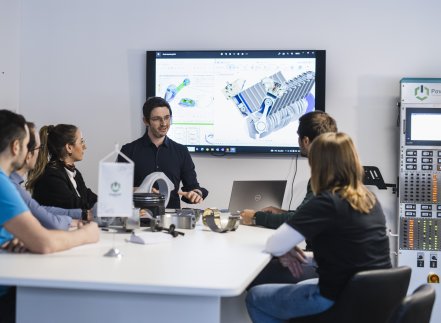
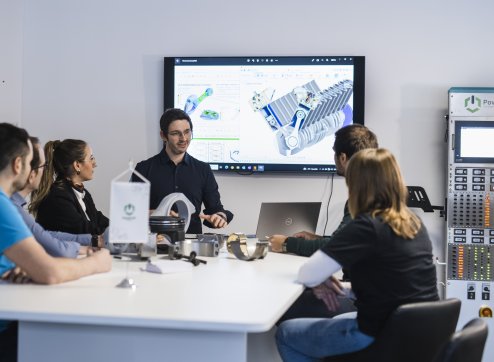
Theory in the classroom is good; practice on your own machine is better. That’s why PowerUP relies on in-house training. We come to your data center. This has a decisive advantage: your team does not learn from an abstract simulator model, but from the actual motors and peripherals it supervises every day.
We address the specific conditions of your installation – from integration into your building management system to local safety regulations. This ensures that what is learned can be applied immediately the next day. No loss of knowledge – 100% practical relevance for your operation.
Investing in your employees’ competence is the most effective protection against unplanned outages. At PowerUP, we are convinced that technical know-how only reaches its full value when it is shared.
Our goal is to enable your technicians to maintain your systems optimally and to detect warning signs early. That’s why our experienced trainers share their hands-on expertise directly — clear, thoroughly grounded, and always at eye level.
Get your team ready to work safely with gas engines. Our in-house training courses are suitable for personnel working with units from various manufacturers, including Jenbacher®, MAN® and MWM®, as well as other makes. These training courses are not provided by the original manufacturers mentioned.
Through targeted training, you minimise operator errors and sustainably improve the efficiency of your system. After all, even the best technology is useless without the person who operates it. For us, one thing always holds true: technology is our driving force, efficiency our focus.
Contact us for a tailored training program and turn your team into true machine experts.