What is biomass? A guide to sustainable energy production

With global demand for renewable energy continuing to rise, operators and industries are looking for reliable alternatives to fossil fuels. While wind and solar capture the headlines, biomass offers a unique opportunity. It is not only a versatile source of energy for heat or fuel but also a powerful way to reduce waste and support local energy independence.
In many cases, biomass uses organic material that would otherwise be discarded or underutilized. That makes it a practical part of the broader shift toward more resilient and resource-efficient energy systems.
This article explains what biomass is, how it is used for energy production, and what benefits and challenges come with it. We also look at how PowerUP supports systems that rely on biomass-based fuels, especially in decentralized energy setups.
What is biomass? Components and production
Biomass refers to organic material that comes from living or recently living organisms. In the context of energy, this usually includes plant-based material and animal waste that can be converted into usable forms of energy such as heat, electricity, or biofuels.
Unlike natural gas or coal, which take millions of years to form, biomass is a renewable energy source on a human timescale. Plants absorb carbon dioxide from the atmosphere as they grow. When biomass is used for energy, that CO₂ is released again and creates a closed carbon loop.
That is why biomass is often described as carbon neutral. However, the reality depends on how the feedstock is sourced, transported, and processed. The goal is always to create a sustainable ecosystem where energy generation supports the environment rather than depleting it.
Biogas Plants: A Comprehensive Guide to Biogas Production
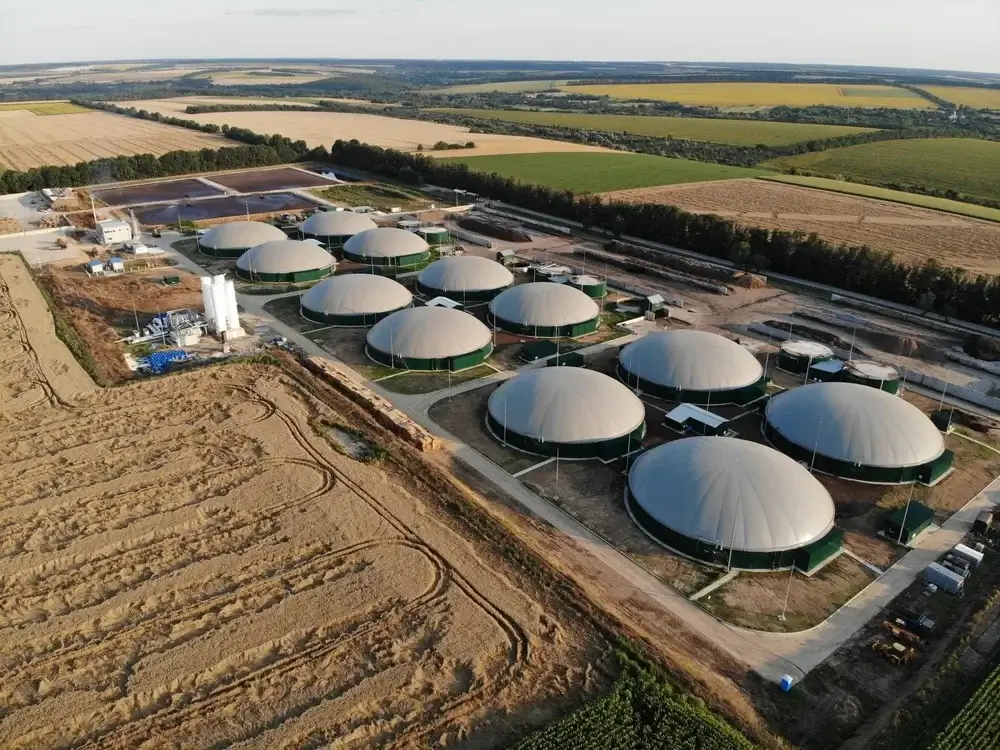
Our comprehensive guide to biogas plants. Learn how a biogas plant works, from anaerobic digestion in the digester to biogas production from organic waste, animal manure, and food waste.
Different types of biomass explained
There are many types of biomass. Each has different characteristics, energy content, and uses. To understand the potential of biomass energy, we must look at the sources.
Common categories include:
- Agricultural crops and residues: These include food crops like corn or sugarcane as well as leftovers like straw, husks, and corn stover. Even manure from livestock farming serves as a potent raw material.
- Woody biomass and forestry by-products: Wood chips, sawdust, bark, and wood waste from logging and wood processing are traditional solid fuels.
- Energy crops: Some plants are grown specifically for use as biomass feedstock. These include fast-growing species like miscanthus or short-rotation willow used for cellulosic energy production.
- Organic waste: Food waste, industrial byproducts from food and beverage processing, and the organic fractions of municipal solid waste (MSW) are increasingly used to generate power.
- Sewage sludge and algae: Though less common, wastewater sludge and algae are being explored as next-generation biomass due to their abundance and high-energy potential.
Each type of raw material has its own energy density, moisture content, and handling requirements. These factors influence how it is used in modern energy systems.
Biomass and energy production: From waste to fuel
Biomass can be converted into energy in several ways depending on the material and the desired output. It is a flexible solution that can produce solid, liquid, or gaseous fuels.
Here are the most common conversion methods:
- Combustion: Solid biomass like wood fuel or pellets can be burned in boilers to generate heat or steam which drives a turbine in a power plant.
- Anaerobic digestion: Wet organic biomass such as manure or food waste is broken down by bacteria in oxygen-free digesters. This process produces biogas or biomethane, a renewable gas primarily made of methane and carbon dioxide.
- Gasification and Pyrolysis: These thermal processes convert biomass into syngas (a mix of carbon monoxide and hydrogen) or bio-oil. A byproduct of this process can be biochar, which serves as a soil enhancer.
- Liquid Biofuels: Ethanol and biodiesel can be made from oil crops or food waste. These liquid fuels are mainly used in transportation to replace petrol and diesel.
Biomass is frequently used in Combined Heat and Power (CHP) systems where energy is produced near the point of consumption. This increases overall efficiency and reliability.
Benefits of using biomass
Biomass offers a number of practical advantages. First, it is a renewable resource when sourced responsibly. Many types of biomass are by-products of other industries which means they can be used without competing with food production or requiring additional land.
Using biomass also reduces methane emissions from decomposing waste and diverts material from landfills. This contributes to more efficient waste management. In rural areas, it can support local energy production and reduce transport distances.
When managed well, biomass helps close material cycles and creates a more circular approach to energy and agriculture. The digestate from anaerobic digestion, for example, returns a valuable nutrient mix to the soil.
Challenges and limitations of using biomass
Despite its benefits, biomass also has limitations. Feedstock availability and transportation logistics can affect both cost and the total carbon footprint. Some biomass types are bulky or seasonal and require storage and consistent supply chains.
There are also sustainability concerns. If land is cleared to grow energy crops or forests are harvested unsustainably, the positive impact on climate change can be undermined and biodiversity may suffer.
Furthermore, the combustion of biomass can affect air quality if not properly controlled. Pollutants must be filtered, and energy efficiency may be lower compared to some other renewable technologies. In some cases, biomass systems also require significant maintenance to handle feedstock variability which may increase production costs.
Biomass in the energy mix
Biomass is one of the few renewable sources that can produce on-demand and dispatchable bioenergy. This makes it a valuable complement to intermittent renewables like wind and solar. It is especially relevant for CHP systems, agricultural facilities, and industrial operations with steady waste streams.
Its flexibility also makes it suitable for decentralized energy systems where local power generation improves grid stability and reduces reliance on large-scale infrastructure. As part of a broader energy transition, biomass has the potential to support cleaner and more efficient systems.
How PowerUP supports biomass-based energy systems
PowerUP works with operators who use biogas and other biomass-derived fuels in CHP units. These setups often face challenges such as gas quality fluctuations, variable feedstock, and non-standard combustion conditions.
We help address these challenges by:
- Supporting combustion efficiency: We provide precise tuning and adaptable components to ensure engine performance remains high.
- Offering condition-based maintenance: Our approach minimizes downtime and extends system life by reacting to real wear rather than rigid schedules.
- Supplying high-quality parts: We offer spare parts suitable for Jenbacher®, MWM®, Caterpillar®, MAN®, and other manufacturers designed to withstand the stresses of biomass energy applications.
Whether your system uses biomethane from agricultural waste or gas from sewage sludge, PowerUP helps maintain performance and improve reliability.
Frequently Asked Questions
Is biomass truly carbon neutral?
What is the difference between biogas and biomass?
Can biomass replace fossil fuels?
Does PowerUP service engines running on syngas?
How does biomass impact waste management?
Read more about:
- Physical security, fire safety, and emergency management in the data center
- Compliance with laws and standards (e.g., KWKG, EEffG) in the data center
- The role of gas engines: Why stationary CHP systems are the foundation of data center power supply
- The key role of gas engines in ensuring resilient power for data centers
- Efficiency upgrades: the key to combating high energy costs in the data center