
The advantages of REMAN engines explained

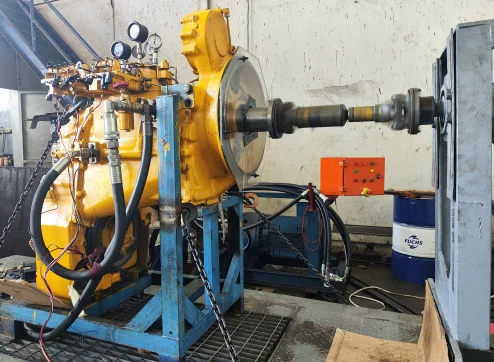
In the demanding world of industrial power generation, operators face a constant dilemma. When an engine reaches the end of its lifecycle, the pressure to maintain engine performance clashes with the reality of tight budgets. Buying a brand new engine requires a massive investment. Opting for used parts or a simple used engine feels like a gamble with reliability.
This is where REMAN engines come into play. They represent the smart middle ground, offering a solution that balances high performance with cost-efficiency.
In this article, we outline the core advantages of remanufactured engines and explain why they are gaining traction across sectors—from biogas plants to large-scale IPPs—that demand reliability, efficiency, and long-term value.
What is a REMAN engine?
A REMAN engine—short for remanufactured engine—is far more than just a repaired unit. It is an engine that has been fully disassembled, cleaned, inspected, and rebuilt to match OEM standards. It is crucial to distinguish this from other options on the market. Unlike used engines, which are typically sold “as-is” with unknown wear histories, or rebuilt engines, which often only address specific failed components, a REMAN engine undergoes a comprehensive engine remanufacturing process.
The process typically involves:
- Complete Disassembly: The core engine is taken apart down to the last bolt.
- Rigorous Inspection: Worn components are not just fixed, they are replaced with new parts or remanufactured parts such as pistons, gaskets, or camshafts.
- Quality Testing: Every reman unit is tested to deliver function and performance comparable to the original engine.
This level of detail allows providers to offer a warranty that often spans multiple years, giving operators the peace of mind they usually only associate with brand new equipment. Whether strictly for the short block, the long block, or the entire genset, the goal is always the same: original equipment quality at a fraction of the environmental and financial cost.
Key components of REMAN engines
In the context of gas engines, the quality of a remanufactured engine stands and falls with the components used. The process begins with the complete disassembly of the core engine. This is followed by a high-tech inspection of all wear parts and critical areas to identify any deviations from the original specs.
Restoring core functionality
Central gas engine spare parts such as the cylinder heads, pistons, connecting rods, crankshaft, and camshafts are either professionally reconditioned using precise machining or replaced entirely with new components. This ensures that all tolerances are met and that the engine operates exactly as the manufacturer intended.
While supporting parts like differentials and other powertrain elements may be relevant in mobile applications, for stationary gas engines, the focus remains strictly on the core combustion and power generation components. The result is a remanufactured engine that offers high-quality performance, improved efficiency, and an extended lifespan. It’s comparable to a new engine, but with a significantly lower carbon footprint.
Reman vs. Rebuilt – What is the best choice for your gas engine?
Your gas engine has reached the end of its service life, and you face a critical choice: New, Reman, or Rebuilt? This decision impacts your bottom line for years to come. In this article, we dismantle the myths, explain the true differences in durability and warranty, and reveal why a condition-based overhaul is often the smartest move to maximize ROI – regardless of your engine’s nameplate.
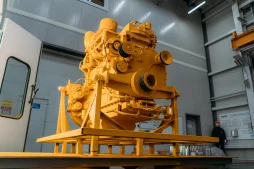
Why choose REMAN over new or used engines?
When deciding between a remanufactured engine, a new engine, or a used engine, several factors come into play: performance, cost, reliability, and sustainability. REMAN engines offer a compelling strategy to maximize your Return on Investment (ROI).
Proven reliability: From diesel to gas
The concept of remanufacturing is well-established in the heavy-duty sector. Just as major manufacturers of diesel engines (like Cummins) offer crate engines to extend the life of a vehicle, the gas engine industry applies the same rigorous standards.
However, there is a key difference in measurement. While automotive warranties might advertise unlimited miles or a 100,000-mile warranty, industrial gas engines are measured in operating hours. Despite the different metrics, the goal is identical: restoring the engine to OEM standards to ensure it performs just like the original engine.
Performance and Reliability
Unlike used parts or engines, which often come with limited documentation and the risk of hidden defects, REMAN units offer transparency. You know exactly what you are getting: a fully inspected and tested machine. Compared to a new engine, a REMAN engine offers comparable performance, ensuring dependable operation and full compatibility with your existing system.
Cost-Efficiency
Buying a remanufactured engine is significantly more cost-effective than investing in a new asset. Since the core material is reused, you pay primarily for the restoration process and the new components, not for the casting of the heavy engine block.
Sustainability
REMAN is the sustainable choice. By prioritizing reuse and participating in core return programs where the old engine is exchanged, you actively reduce material waste and energy consumption. If you are operating gas engines in power generation, a REMAN solution ensures you are using the right engine, backed by quality control, aligned with OEM specifications, and ready to perform.
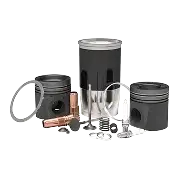
Discover the new
PowerUp Shop!
Find high-quality parts for your gas engines – fast, reliable, and built for performance.
Who should consider a REMAN engine?
Operators of natural gas and biogas engines in energy production can greatly benefit from this approach. It is a technically sound alternative to purchasing new units, especially in scenarios where downtime must be minimized.
REMAN engines are particularly suitable for:
- Independent Power Producers (IPPs): Where every hour of downtime means lost revenue, these engines offer a fast alternative to waiting for a new engine delivery. The durability matches that of a new unit, ensuring the plant can run at full load.
- Biogas Plant Operators: Facilities working with variable gas compositions benefit from extending the lifecycle of existing equipment while maintaining alignment with OEM specifications.
- CHP Facilities: For Combined Heat and Power plants, the advantages are clear: consistent output, reduced environmental impact, and full adherence to performance and safety standards.
For anyone aiming to combine operational efficiency with budget-conscious planning, a REMAN engine presents a strong case.
Secure long-term value with PowerUP
For operators of gas-powered systems, REMAN engines offer a reliable path toward long-term performance and cost-efficiency. Backed by strict quality control and built to meet OEM specifications, these engines combine the advantages of reduced downtime, extended service life, and sustainability.
With PowerUP as your partner, you gain access to industry expertise and high-quality solutions suitable for Jenbacher®, MWM®, and other manufacturers. Our approach focuses on delivering reliable replacement engines and spare parts with minimal disruption and helping you maintain uptime while planning for long-term operational stability.