REMAN – What does it mean?

In the fast paced world of industrial power generation, clear communication is just as important as technical precision. Operators of biogas plants or IPP facilities are often bombarded with offers for “overhauled,” “refurbished,” or “rebuilt” parts. But when it comes to long-term reliability and securing the value of your assets, one term stands out as the gold standard: REMAN.
REMAN refers to the remanufacturing of used components, restoring them to meet or exceed OEM (Original Equipment Manufacturer) specifications. It is not merely a repair. It is a complete reset of the component’s lifecycle. In gas engine applications, this process offers a cost-effective and sustainable alternative to new products, without the risks associated with used parts.
This article explains what REMAN means, how it fundamentally differs from simple rebuilding, and why choosing remanufactured parts, from turbochargers to oil pumps, is a smart choice for reducing downtime and extending equipment life.
What does REMAN mean in industrial applications?
In industrial environments where reliability and uptime are critical, REMAN is a specific technical classification. It refers to the process of restoring used engines or gas engine spare parts to strict specifications through a controlled, standardized remanufacturing process. This is not a “quick fix” in a local workshop. It is an engineering process.
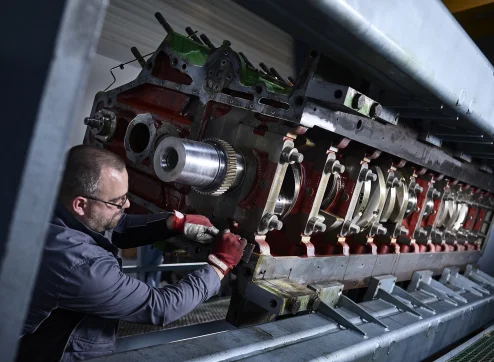
This rigorous procedure involves complete disassembly, thorough cleaning, advanced inspection (using methods like crack testing), and the mandatory replacement of wear parts with new components. Finally, extensive testing ensures that performance meets the original standards.
Remanufactured products such as actuators, turbochargers, oil pumps, cylinder heads, and connecting rods are widely used to minimize downtime. For operators of gas engine systems, whether running on natural gas or biogas, REMAN ensures that key components are restored to high quality operational condition.
Compared to aftermarket replacements or unverified used parts, REMAN offers a dependable solution with improved uptime, reduced overhaul frequency, and enhanced system durability.
Remanufactured vs. rebuilt or overhauled – What’s the difference?
While the terms “remanufactured,” “rebuilt,” and “overhauled” are often used interchangeably in casual conversation, they refer to different technical processes with distinct outcomes. Understanding this hierarchy is essential for making informed budget decisions.
The hierarchy of restoration
- Overhauled/Rebuilt: These terms usually describe a repair process that focuses on replacing only the visibly worn or failed parts. An overhauled engine or component may retain aged internal parts that are “still okay” for now. The result is varied reliability and often a shorter warranty.
- Remanufactured (REMAN): In the remanufacturing process, the component is completely dismantled. All wear components (bearings, seals, guides) are automatically replaced with new ones, regardless of their apparent condition. The core material is machined to original dimensions. The result is a product that performs functionally like new, backed by a comprehensive warranty.
For operators seeking high-quality, long-term solutions for gas engine systems, remanufactured parts deliver greater consistency. They eliminate the guesswork and provide a stable foundation for your maintenance planning, helping to reduce unexpected downtime.
Why REMAN matters for your bottom line
In industrial power generation, reliability, efficiency, and sustainability are non-negotiable. This is where remanufacturing proves its value. It allows you to maintain a high-performance fleet without the excessive capital expenditure of buying brand new parts for every maintenance interval.
By restoring complex components such as cylinder heads, turbochargers, alternators, and connecting rods to OEM specifications, reman processes help extend equipment life and improve availability. A reman component is not simply reused. It is upgraded.
Furthermore, this approach supports your sustainability goals. By giving existing units a new life, you significantly reduce the carbon footprint associated with manufacturing new steel and aluminum castings. It is a technically sound choice that satisfies both the engineer’s need for quality and the controller’s need for budget efficiency, especially in environments where resource efficiency is critical.
Secure your operational future with PowerUP
For operators aiming to minimize downtime, comply with technical requirements, and extend the operational life of their systems, remanufacturing represents more than just a maintenance solution, it is an investment in long-term performance and efficiency.
At PowerUP, we offer remanufactured products designed to meet strict specifications and deliver lasting performance. Our REMAN solutions, suitable for Jenbacher®, MWM®, and other manufacturers, help operators reduce downtime and improve operational efficiency.
If you are exploring options for remanufacturing, our team is here to support you with the expertise and reliability needed to keep your systems running smoothly.