What is the difference between natural gas and biogas?

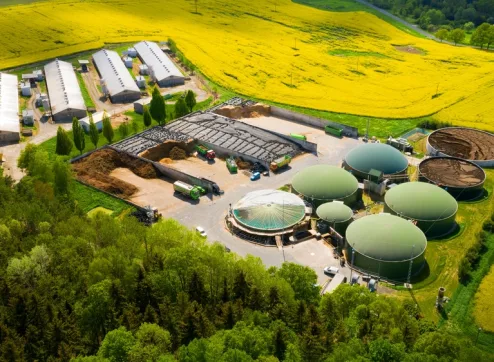
Biogas and natural gas are two significant energy sources used globally for energy generation. While both are composed primarily of methane and can be used for similar applications, they are fundamentally different. One is a finite fossil fuel, and the other is a key renewable player in the energy transition.
Understanding the difference between biogas and natural gas is essential for operators, investors, and anyone involved in the energy sector. This article provides a detailed comparison of their origin, composition, environmental impact, and technical challenges.
The Core Difference: Origin and Production
The most significant difference between biogas and natural gas is where they come from and how they are made.
Biogas Plants: A Comprehensive Guide to Biogas Production
Our comprehensive guide to biogas plants. Learn how a biogas plant works, from anaerobic digestion in the digester to biogas production from organic waste, animal manure, and food waste.
Natural Gas: A Finite Fossil Fuel
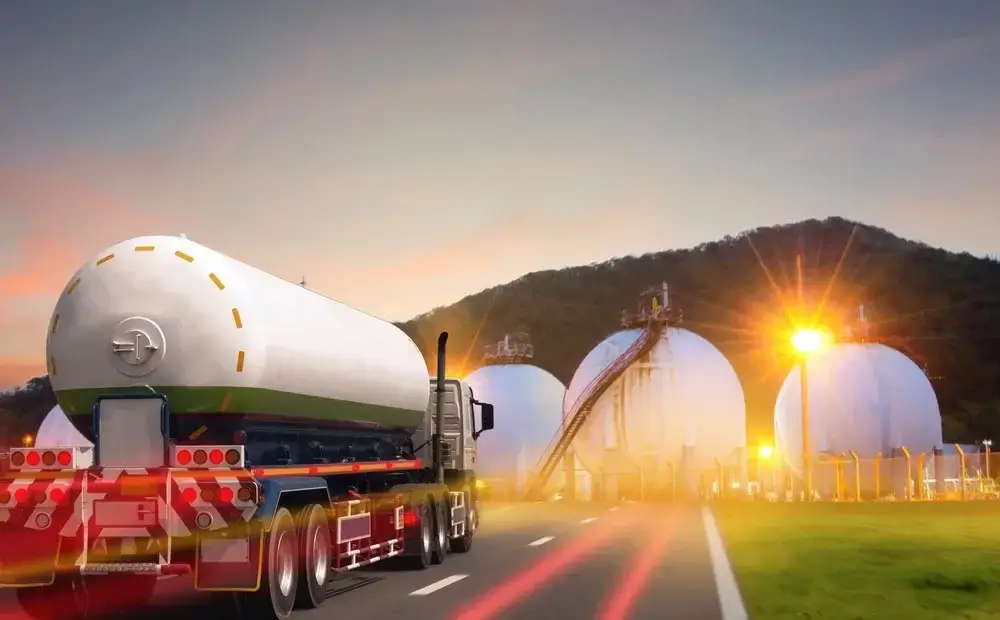
Natural gas is a fossil fuel found in deposits deep beneath the Earth’s surface. It was formed millions of years ago from the decomposition of dead plants and animals under intense heat and pressure. It is extracted through drilling and is a non-renewable, finite resource. Its primary advantages are its high energy density (calorific value) and the well-established, existing infrastructure for its transport via the power grid and pipelines.
Biogas: A Renewable, Circular Process
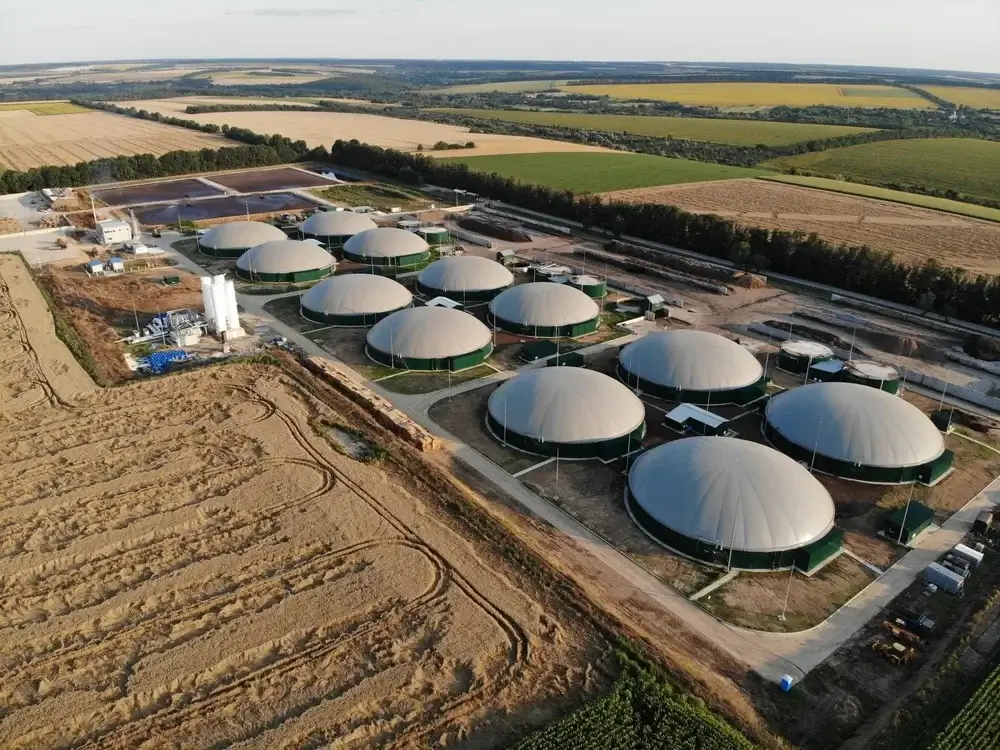
Biogas is a renewable energy source produced right now, on the surface. It is generated in biogas plants through a biological process called anaerobic digestion. In this process, microorganisms break down organic materials (such as animal manure, food residues, or energy crops) in an oxygen-free fermenter. Biogas is part of the active carbon cycle, making it a sustainable and renewable resource.
Comparison of Composition and Calorific Value
While both gases are “methane” gases, their chemical composition as-produced is very different.
Raw Biogas vs. Natural Gas
Raw biogas, the gas that comes directly out of the fermenter, is not pure methane. It typically contains only 50% to 70% methane (CH4). The rest is mostly carbon dioxide (CO2), along with impurities like water vapor and corrosive hydrogen sulfide (H2S). Because of this high CO2 content, its calorific value (or energy density) is significantly lower than that of natural gas, which is typically over 90% methane.
Upgraded Biogas (Biomethane)
This is where the two gases can become one. Raw biogas can go through an “upgrading” or “purification” process. This process strips out the CO2, moisture, and other impurities. The result is called biomethane or Renewable Natural Gas (RNG).
This biomethane is chemically almost identical to fossil natural gas, has the same high calorific value, and is of high enough quality to be injected directly into the existing natural gas grid or used as a vehicle fuel.
Natural Gas: A Comprehensive Guide to the Global Energy Source
What is natural gas? The ultimate guide to its formation, chemical formula, LNG, Henry Hub prices, and its future in power generation. Learn how variable gas quality impacts engines.
The Environmental Impact: Greenhouse Gas Emissions
The difference in environmental impact is a critical factor in the global energy transition.
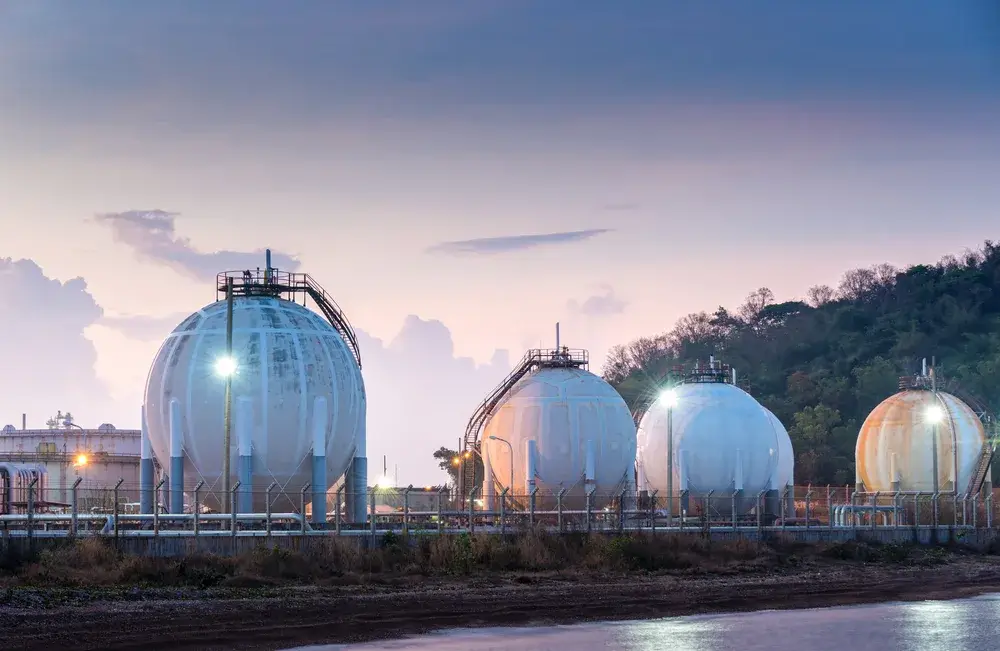
Natural Gas: Releasing Sequestered Carbon
The drawback of natural gas is its environmental impact. When it is burned, it releases carbon that has been trapped (or sequestered) underground for millions of years. This adds new carbon to the atmosphere and is a primary driver of greenhouse gas emissions and climate change.
Biogas: A Carbon-Neutral Cycle
The advantage of biogas is that it is part of a “biogenic” or living carbon cycle. The carbon released when biogas is burned was only recently captured from the atmosphere by the plants that were eaten by animals (producing manure) or grown as energy crops. Therefore, its combustion is considered carbon-neutral.
More importantly, the biogas production process prevents greenhouse gas emissions. When animal manure or food waste rots in a lagoon or landfill, it releases methane (a potent greenhouse gas) directly into the atmosphere. A biogas plant captures this methane and converts it to less-potent CO2, resulting in a net environmental benefit.
What is better for Energy Generation?
For a sustainable energy future, biogas (especially when upgraded to biomethane) is undoubtedly the better, renewable, and carbon-neutral choice. It actively recycles waste and replaces a finite fossil fuel.
However, there is a critical technical difference. For on-site electricity generation in a Combined Heat and Power (CHP) plant, the raw biogas used is technically far more challenging than clean natural gas. Raw biogas is wet, aggressive, corrosive, and full of contaminants. This creates a massive technical challenge for the gas engine.
How PowerUP Solves the “Difference” in Biogas
The greatest “Difference<>Biogas” is not just its origin, but its difficult technical nature. Natural gas is clean and easy to burn. Raw biogas is corrosive and destroys standard engine components.
This is where PowerUP’s expertise becomes critical. We solve the problem that this difference creates. Technology is our drive, efficiency our focus. PowerUP is the specialist in neutralizing the negative technical effects of raw biogas.
With our robust, high-performance gas engine spare parts suitable for Jenbacher and MWM engines, we make the “better” gas (biogas) just as reliable and cost-effective to use as the “easy” gas (natural gas). Our components are engineered with advanced alloys and coatings to resist the corrosion and wear that biogas causes. We ensure that your investment in the renewable alternative is protected and profitable.