What is Captive Power Generation? – Your Path to Energy Sovereignty

For decades, the industrial standard was simple: you connect to the national grid, pay the monthly bill, and hope the lights stay on. Today, this passive model is becoming a liability. Rising tariffs, grid instability, and the pressure to decarbonize are forcing companies to rethink their energy supply.
The solution for many is Captive Power Generation. But what exactly does this term mean? Is it just a backup generator, or is it a complete energy strategy?
In this article, we define the concept of captive power, explore its mechanics, and explain how it differs from other models like IPP or CHP. We also show you how to maintain your independence with high-performance services from PowerUP.
The Definition: Power Where You Need It
Captive Power Generation refers to the production of electricity by a generation facility primarily for its own consumption. Instead of relying on a distant utility company to transmit power over hundreds of kilometers of cables (incurring losses along the way), a Captive Power Plant (CPP) handles generating electricity directly on-site.
This is the ultimate form of distributed generation. The producer and the consumer are the same entity.
- The User: Typically energy-intensive industries like steel mills, chemical plants, data centers, or large textiles factories in regions like Gujarat.
- The Goal: To achieve energy independence and ensure a secure power supply that is immune to the disruptions and fluctuations of the public grid power.
How Captive Power Generation Works
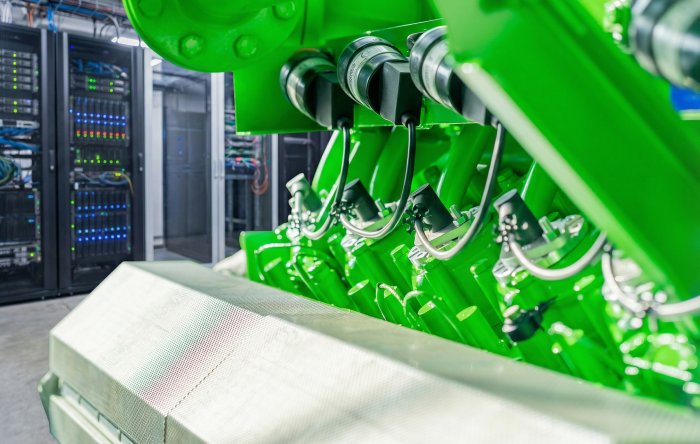
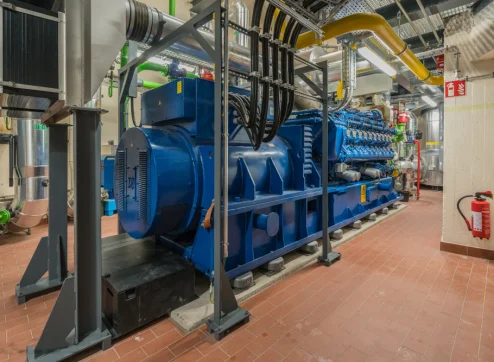
At its core, captive power is about converting a fuel source into electricity locally. While technologies vary from solar power to steam turbines, the workhorse of industrial captive power is the reciprocating gas engine.
The process is straightforward but critical:
- Combustion: Fuel is burned in the engine cylinders to create mechanical energy.
- Conversion: An alternator coupled to the engine converts this movement into electricity.
- Utilization: This power is fed directly into the facility’s internal grid to meet energy needs.
The Fuel Flexibility: From Fossil Fuels to Renewable Energy
Modern power systems are not tied to dirty fuels. Engines can run on a variety of energy sources:
- Natural gas: The cleanest of the fossil fuels, offering high efficiency and quick start-up times.
- Biomass / Biogas: Converting organic waste from industrial processes (e.g., in food processing or agriculture) into sustainable energy.
- Hydrogen blends: Preparing for a Net-zero future and reducing carbon emissions.
This flexibility allows companies to support sustainability goals and launch green initiatives by integrating renewable sources.
Read about more advantages in our article:
The Operational Modes
Depending on the local infrastructure and energy demands, Captive Power Generation operates in two ways:
- Grid-connected: The plant runs in parallel with the public grid. The grid acts as a battery—supplying extra power when required or absorbing excess power when the plant overproduces. In some regions, open access regulations even allow you to wheel this power to other locations.
- Off-grid (Island Mode): The facility is completely isolated. This is common in remote mining operations or regions with extremely unreliable infrastructure. Here, the captive plant is the only lifeline against outages, often supported by energy storage systems.
Distinctions that Matter: The “Why”, “Who”, and “How”
To navigate the energy landscape effectively, it helps to distinguish between the motivation, the business model, and the technology.
The “Why”: Security vs. Profit (The Motivation)
The driving force behind the investment differs fundamentally.
- Captive Power (CPP): The goal is security and savings. You build the plant because the cost of grid power is too high, or the reliability is too low. The return on investment comes from avoided costs.
- Independent Power (IPP): The goal is profit. You build the plant to generate a product (electricity) to sell. The return on investment comes from revenue.
The “Who”: Consumer vs. Seller (The Business Model)
While the technology might look identical (e.g., a row of gas engines), the role of the operator is different.
- Captive Power (CPP): You make it to use it. The producer and the consumer are the same entity.
- Independent Power (IPP): You make it to sell it. The producer sells to a third party (utility or private offtaker).
If you are considering selling power commercially, you are entering the domain of an IPP. Understanding the commercial nuances, such as the difference between IPP and PPA (Power Purchase Agreements), is crucial for your financial modeling.
The “How”: Electricity vs. Efficiency (The Technology)
Finally, do not confuse the purpose with the technology.
- Captive Power Generation describes the act of self-supply.
- CHP (Combined Heat and Power) describes a technology to increase energy efficiency.
Most modern captive plants should ideally be cogeneration plants to maximize ROI by using waste heat. However, not all are. To understand when to upgrade, read our guide on the difference between Captive Power Plants and CHP Plants.
Why Industries Switch to Captive Power
The shift to self-generation is rarely a hobby; it is a calculation driven by high energy consumption and costs.
1. Reliability is Currency
For a data center, a millisecond of power loss means data corruption. For a glass factory, a blackout means solidified glass, ruining the furnace. Reliable power provides a stable frequency and voltage that public grids often cannot guarantee.
2. Cost Control
By generating your own power, you bypass transmission fees, grid taxes, and peak-demand surcharges. Cost savings are often substantial, making the operation highly cost-effective. For a detailed breakdown of the financial benefits, check out our article on The advantages of Captive Power Plants.
Securing Your Investment with PowerUP
Implementing Captive Power Generation transforms your business. You gain independence, but you also take on the responsibility of an operator. A gas engine is a high-performance asset that requires precision maintenance to deliver its return on investment.
Technology is our drive, efficiency our focus. PowerUP is your partner for ensuring the longevity of your captive assets. We offer independent energy solutions suitable for major engine brands.
- Spare Parts: We supply high-quality parts suitable for INNIO Jenbacher®, MWM®, and MAN® gas engines. Our goal is to offer you reliable alternatives that keep your running costs low.
- Overhauls & Commissioning: We perform condition-based overhauls to revitalize aging engines and support the commissioning of re-deployed assets.
- Field Service: Our experts support you on-site or via remote maintenance to minimize downtime and ensure your power solutions deliver continuously.
Your energy sovereignty depends on the reliability of your engines. Trust PowerUP to keep them running.