Versatile Power – The Range of Gases for Jenbacher® Gas Engines

Jenbacher gas engines are often considered the “omnivores” among aggregates in the energy industry. While other engine manufacturers focus on specific niches, the strength of Jenbacher technology lies in its extreme fuel flexibility.
Whether running on classic natural gas, agricultural biogas, or pioneering green hydrogen: These machines transform almost any combustible substance into electricity and heat.
In this article, we highlight the range of gases for Jenbacher gas engines. We explain why the fuel determines the choice of the right engine series and how you can manage the specific wear of different gas types with spare parts from PowerUP to ensure the maximum life cycle of your engine.
Natural Gas: The Efficiency Champion for IPPs
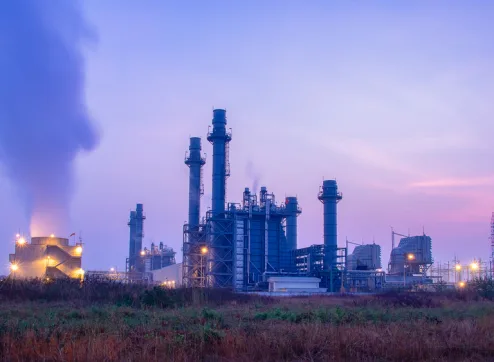
Natural gas remains the most widely used fuel for stationary gas engines. It is characterized by a high methane number (knock resistance) and very clean combustion.
For Independent Power Producers (IPPs) and industrial applications like data centers, natural gas is often the first choice because it enables the highest electrical efficiencies.
Engines like the Jenbacher Type 6 or the massive J920 FleXtra are technologically optimized to extract the maximum from this fossil yet comparatively low-emission carrier. Since natural gas contains hardly any impurities, maintenance intervals here are often the longest, making it ideal for stable onsite power.
Biogas: Sustainable Energy from Agriculture
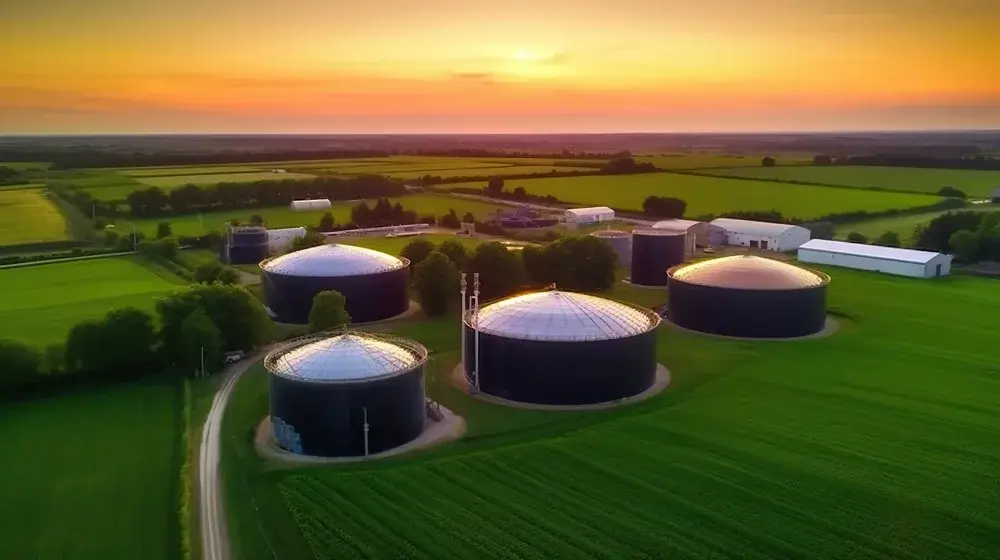
For many of our customers, especially farmers and greenhouses, biogas is the number one energy source. It is produced by the fermentation of organic matter (manure, maize silage, waste) and is a central building block of green energy.
However, biogas is demanding. The methane content fluctuates (often between 50% and 60%), and depending on the substrate, the gas can contain corrosive by-products like hydrogen sulfide. Here, the Jenbacher Type 3 proves its worth. Its robust design forgives fluctuations in gas quality better than high-speed engines.
The Service Challenge: Sulfur in the gas leads to the formation of acids (SO2/SO3) during combustion, which acidifies the engine oil. This requires special oils and shorter change intervals to prevent corrosion on bearings and liners.
Turning Waste into Watts: Landfill and Sewage Gas
Going a step further is the utilization of landfill gas and sewage gas. Here, a disposal problem is turned into an energy source. These gases arise from the decomposition of waste or sewage sludge.
The technical challenge lies in the impurities, particularly the so-called siloxanes. These organic silicon compounds burn in the engine to form sand-like silicon dioxide. The result: Massive deposits in the combustion chamber and on the valves, which act like sandpaper.
The PowerUP Solution: Anyone using sewage gas needs components that are resistant. We offer cylinder heads and valves suitable for Jenbacher engines that feature special armoring to withstand this abrasive wear, ensuring compliance with emissions regulations.
The Future is Now: Hydrogen and Special Gases
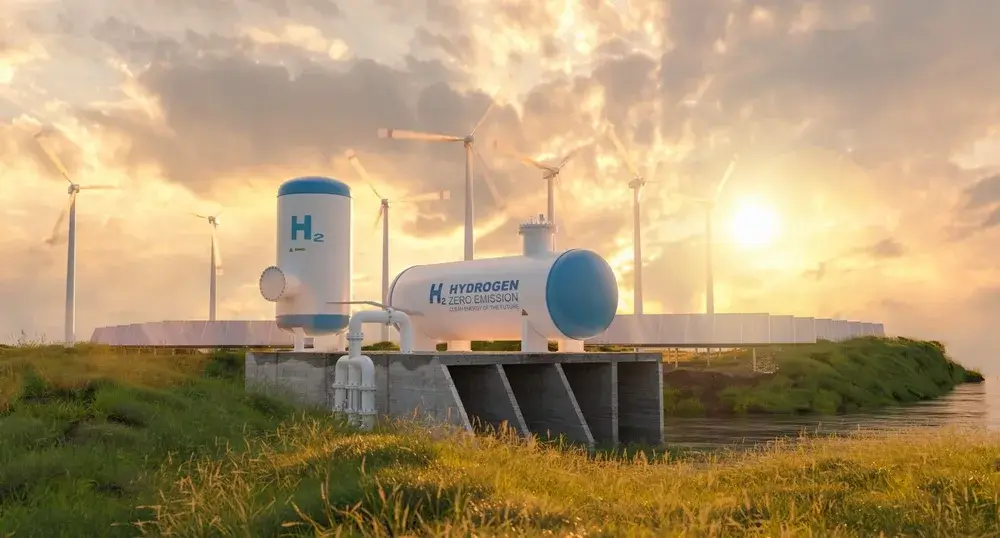
The energy world is changing, and with it the range of gases. A major topic is “H2-Readiness”. Modern Jenbacher gas engines can already be operated with high proportions of hydrogen in the natural gas grid or even run on 100% hydrogen.
In addition, there are niche applications for special gases:
- Mine Gas: Escapes from old coal seams.
- Syngas (Wood Gas): Created during wood gasification, often contains tars and a lot of hydrogen.
- Flare Gas: Utilization of associated gas in oil production.
A look at the history of INNIO Jenbacher shows that adapting to new energy carriers has always been part of the company DNA in Tyrol, Austria (Tirol) – from diesel to gas, and now to Net Zero.
How the Engine Adapts: Technology Behind Flexibility
How does an engine manage to run with such different fuels? The secret lies in the engine control and hardware configuration.
- Compression: An engine for biogas often has a different compression ratio (piston bowl) than a natural gas engine to prevent knocking.
- Mixture Cooling: Gases with low calorific value need a different type of mixture formation and cooling by the turbocharger.
- Ignition Timing: The control system adjusts the ignition timing with millisecond precision to the methane number (knock resistance) of the gas.
You can find more on the technical details of the combustion process in our article:
Gas Quality vs. Engine Wear: What Operators Must Know
For the operator, fuel flexibility means one thing above all: You must know what is in the tank. The gas quality directly determines the wear and thus the costs.
- Clean Gas (Natural Gas): Focus is on thermal load and mechanical abrasion.
- Contaminated Gas (Bio/Landfill): Focus is on chemical wear (corrosion, acid attack).
When a general overhaul is due, we at PowerUP first analyze what the engine was operated with. For a biogas engine, we often recommend components (e.g., cylinder liners with special honing patterns or anti-polishing rings) that are more robust against impurities than standard OEM parts for natural gas.
Your Independent Partner for Every Fuel Type
Whether you operate a biogas plant, utilize landfill gas, or are connected to the natural gas grid as an IPP – your engine must run. The versatility of Jenbacher gas engines is impressive, but it also requires a partner who understands the differences.
PowerUP is this partner. We don’t just supply parts. We deliver energy solutions tailored to your specific gas.
- Special filters for contaminated renewable gases.
- Resistant spark plugs for biogas operation.
- Consulting on switching to other gas types.
- Webinars and case studies to keep you informed.
Use the full flexibility of your plant – we ensure the stability.