Inside the Jenbacher® Type 4 Series – When Efficiency Meets Performance

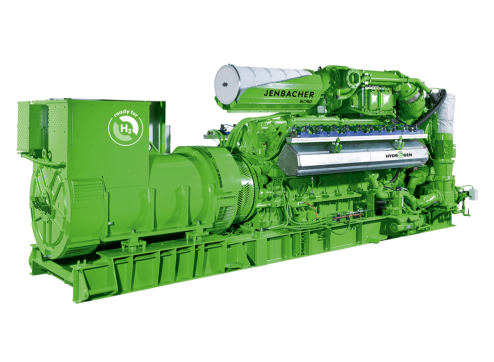
In the portfolio of Jenbacher gas engines, the Type 4 series occupies a special position. While the Type 3 is considered the robust “omnivore” and the Type 6 serves the heavyweight class of large power plants, the Jenbacher Type 4 is the technological precision athlete in the middle class.
With a power range of approx. 800 to 1,500 kW, this series was developed with a clear goal: Maximum efficiency at high power density.
The Conflict: High-performance technology demands understanding and care. A precision engine like the J420 reacts more sensitively to maintenance intervals or gas quality fluctuations than robust older models. If neglected, the efficiency advantage—the very reason for the investment—quickly turns into a cost trap.
The Solution: In this article, we analyze what drives the Jenbacher Type 4, where it plays out its strengths, and how you can ensure with spare parts and services from PowerUP. This efficiency remains visible on your electricity bill even after years of operation.
The Concept: High-Tech for the Middle Class
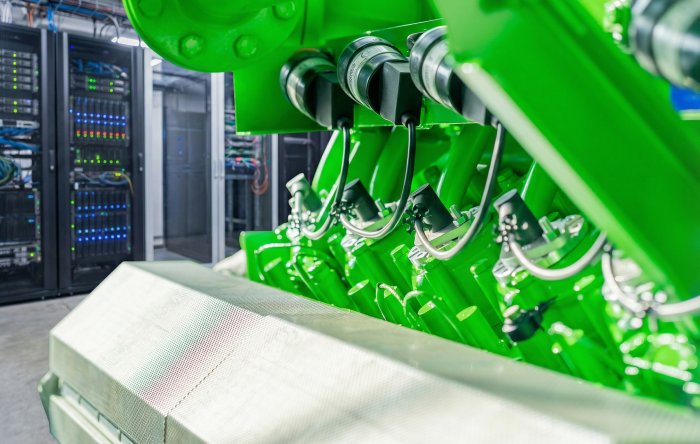
The Jenbacher Type 4 series (models J412, J416, J420) closes the gap between the smaller engines and the large aggregates. It was developed based on the experiences of the proven Type 3 and Type 6 concepts, but with a decisive difference: The focus was placed even more strongly on fuel utilization.
The Jenbacher Type 4 is known for its excellent electrical efficiency in its class (approx. 43-44%). This makes it the first choice for applications where the gas price is high or the yield per cubic meter of gas must be maximized.
The models at a glance:
- J412: 12-cylinder (approx. 800–900 kW).
- J416: 16-cylinder (approx. 1,100–1,200 kW).
- J420: 20-cylinder (approx. 1,500 kW) – the most popular model of the series.
Technology in Detail: 4-Valve Technology and Precision
Let’s look at the functional principle that makes the Jenbacher Type 4 so efficient. Compared to simpler designs, this series relies on modern 4-valve technology per cylinder.
Optimized Gas Exchange
Four valves (two intake, two exhaust) ensure that the combustion chamber can be filled with the gas-air mixture and emptied of exhaust gases extremely quickly and efficiently. This enables higher speeds with consistently clean combustion. This “breathing” capability is the key to the engine’s high performance.
High Power Density
The Jenbacher Type 4 is built compactly but delivers enormous power. This means that the thermal and mechanical load on the components is high. Pistons, cylinder liners, and cylinder heads must withstand extreme pressures.
The PowerUP Approach: We know that precision decides here. Our spare parts, developed suitable for Jenbacher Type 4, aim to master these loads safely. We rely on high-quality alloys for valve seat rings and optimized honing patterns for the liners to keep the oil film stable even under full load.
Applications: Where the Type 4 is at Home
Due to its characteristics, the Jenbacher Type 4 is often found in applications that offer stable conditions and place high demands on profitability.
Greenhouses (Commercial Horticulture)
Here, the Type 4 is a star. In Combined Heat and Power (CHP), it generates electricity for lighting and heat for the climate. Especially important: The exhaust gas is cleaned and used as CO2 fertilizer for the plants. For this, the combustion must be extremely clean—a parade discipline of the Type 4.
Industry and IPP
For industrial self-suppliers or smaller Independent Power Producers (IPP), the J420 often offers the best ratio of footprint to output. It is frequently operated with natural gas, as its efficiency advantages come into play best here.
Efficient Biogas Plants
The Jenbacher Type 4 is also used in the biogas sector if the plant is large enough and the operator values maximum electrical yield. Here, however, careful gas treatment is essential, as the high-tech components react more sensitively to contamination than, for example, a Type 3.
Maintenance and Rebuilds: Preserving Precision
A high-performance athlete needs better support than an amateur athlete. This also applies to the Jenbacher Type 4. The maintenance intervals must be strictly adhered to, and the quality of the spare parts is non-negotiable.
When the engine reaches 60,000 operating hours, a general overhaul (rebuild) is due. At PowerUP, we go into particular detail with a Type 4 rebuild:
- Measurement: Since the components are built compactly, we meticulously check the crankcase and bearing lanes for distortion.
- Upgrades: We offer cylinder heads with improved flow channels and more stable valves to secure efficiency in the second life cycle.
- Shortblock Exchange: To minimize downtime in production (e.g., in a greenhouse), we often keep overhauled shortblocks in stock.
You can find out how this process works in detail in our article:
Comparison: Jenbacher Type 3 vs. Type 4
Operators often ask us: Which engine is better? The answer depends on your goal.
The Jenbacher Type 3 is the robust workhorse. It forgives fluctuating gas quality and is easy to maintain. Ideal for remote biogas plants or landfill gas.
The Jenbacher Type 4 is the efficient precision tool. It gets more kilowatt-hours out of the same amount of gas. Ideal for natural gas, grid stabilization, and projects where ROI is defined by electrical efficiency.
PowerUP: Your Partner for Performance
The Jenbacher Type 4 is a machine for professionals who can calculate. It rewards good maintenance with excellent numbers. We at PowerUP understand this calculation.
As an independent partner, we help you optimize the operating costs of your Type 4 fleet:
- Bespoke Parts: From spark plugs to the complete piston kit.
- Technical Consulting: We help you find the optimal maintenance time through condition-based monitoring.
- Availability: So that your plant produces electricity instead of waiting for parts.
With PowerUP, your efficiency machine remains exactly that: efficient.