Compliance with laws and standards (e.g., KWKG, EEffG) in the data center

There are days when the Data Center Manager’s job feels less like technology and more like law. You started your career to build complex infrastructures and keep the digital world running. But today, regulations, legal texts, and audit requirements are piling up on your desk.
Uncertainty is growing: Does my plant still meet current emission limits? Do I have to recover my waste heat? And when do I actually qualify as “critical infrastructure”?
Compliance with laws governing data centers and the relevant standards is no longer a “nice-to-have” but the basis of your operating permit. Whether in Hamburg, Vienna or Zurich – national laws such as the EnEfG or the EAG can seem like bureaucratic monsters at first glance.
But those who navigate this jungle will find opportunities: legal certainty, protection against fines, and access to lucrative funding programs. Compliance is the silent guardian that turns a technical operation into a sustainable, economically viable business.
I’m not speaking here as a lawyer—I’m an engineer. But as the head of component development at PowerUP, I see every day how regulatory requirements have direct technical consequences. A stricter NOx limit doesn’t just mean a new number on the certificate—it means, in concrete terms: a different spark plug design, a different combustion path, and sometimes a new cylinder head. Those who understand this can act early on, rather than having to retrofit later.
New rules for energy use and efficiency
Lawmakers across the DACH region are stepping up pressure to meet climate targets. The goal is clear: data centers should curb their enormous energy demand, improve efficiency, and harness waste heat as a resource.
Germany: Energy Efficiency Act (EnEfG)
The Energy Efficiency Act (EnEfG) has been in effect in Germany since 2023. It is one of the world’s strictest laws for data centers and establishes stringent technical guardrails:
- PUE requirements: New data centers that begin operations from July 2026 must achieve a Power Usage Effectiveness (PUE) of 1.2 or better. This requires the use of highly efficient cooling systems (e.g., direct liquid cooling).
- Waste heat utilization: New plants must be technically equipped to recover waste heat (at least 10% reuse from 2026, increasing to 20% from 2028).
- Energy management: Operators with an annual energy consumption exceeding 7.5 GWh must implement a certified energy management system (EnMS) in accordance with ISO 50001 or EMAS.
Austria: Federal Energy Efficiency Act (EEffG)
In Austria, too, the Federal Energy Efficiency Act governs obligations for energy savings. The emphasis here is strongly on company size:
- Audit obligation: Large companies (more than 249 employees or €50 million in turnover) are required to carry out an external energy audit every four years or to maintain a certified management system (ISO 50001).
- Measures: It is primarily about demonstrating energy-efficiency measures that reduce final energy consumption – these include upgrades to gas engines or cooling systems that directly factor into the assessment.
Financial incentives through government support for efficiency improvements
Not every law is a stick — many regulations are carrots. They financially reward operators who do not simply draw electricity from the grid but generate it themselves in a highly efficient way (cogeneration).
Germany: The Combined Heat and Power Act (KWKG)
The Combined Heat and Power Act (KWKG) is the central funding instrument. It operates through surcharges:
- The bonus: Operators of a CHP plant receive a financial supplement (cents/kWh) for each kilowatt-hour (kWh) of electricity generated for a fixed period (e.g. 30,000 full-load hours).
- Modernisation: Particularly interesting for existing plants: If you modernise your old CHP (costs > 25% or > 50% of a new installation), you can qualify for subsidies again. A “shortblock” swap or comprehensive upgrades by PowerUP can reach this threshold.
- Condition: The system must be “highly efficient,” meaning it achieves primary energy savings (overall efficiency).
This is a point that is often overlooked in practice: A comprehensive overhaul using upgraded components isn’t just technically sound—it can also be a prerequisite for regaining eligibility for subsidies. Anyone who has their engine overhauled by PowerUP and opts for more modern cylinder heads or optimized pistons is investing in two things at once: greater efficiency and improved eligibility for subsidies. Upon request, we can calculate whether a planned overhaul meets the KWKG modernization threshold—this is often the decisive factor between a subsidized and a non-subsidized investment.
Austria: The Renewable Energy Expansion Act (EAG)
In Austria, the Renewable Expansion Act (EAG) replaces the old Green Electricity Act and promotes the transition:
- Investment grants: There are direct subsidies for the construction or revitalization of facilities that generate electricity from renewable gases (biogas, hydrogen).
- Market premiums: To offset the difference between the production costs of green electricity and the market price, the state pays a variable market premium.
- Focus: The law focuses heavily on decarbonisation. If you convert your data center to run on biogas, you’ll benefit significantly.
Emissions: Clean air is required.
Alongside efficiency, environmental protection is a priority. Emission limits for air pollutants – particularly nitrogen oxides (NOx), carbon monoxide (CO), and formaldehyde – are becoming stricter across the EU.
For me, the issue of emissions is the clearest example of how technology and regulation must go hand in hand. From my work on cylinder heads and combustion processes, I know that NOx is produced at high combustion temperatures. Optimizing the combustion chamber—through more precise air-fuel mixing, better cooling, and more accurate ignition timing—not only reduces emissions for the inspector but also improves efficiency. Compliance and efficiency are not a contradiction. They are two sides of the same coin.
Germany: 44th BImSchV
The 44th Federal Immission Control Ordinance (BImSchV) transposes the European MCP Directive (Medium Combustion Plant Directive) into national law. It applies to medium-sized combustion plants (1 MW to 50 MW thermal input):
- Limits: For natural gas engines, an NOx limit of 100 mg/Nm³ often applies (sometimes stricter for new installations). Formaldehyde limits have also been tightened.
- Existing installations: For existing engines, transitional periods apply (often until 2025 or 2029), by which time they must be retrofitted. Without an SCR catalytic converter or other emissions upgrade, they may face decommissioning.
For operators whose existing engines do not yet meet these limits, PowerUP offers concrete technical solutions: emission upgrades for Jenbacher® and MWM® engines that reduce NOx emissions through optimized combustion control and adjusted ignition parameters—without replacing the entire unit. In many cases, compliance can be achieved through targeted component modifications that simultaneously improve efficiency. Anyone facing an emissions test should check this early on—not just when the official notice arrives.
Austria: Ordinance on Combustion Installations (FAV)
The Austrian equivalent is the Combustion Plant Ordinance (FAV). It also requires operators to take action:
- Measurement obligations: Operators must arrange for recurring emissions measurements, usually every three years.
- Technical adjustment: Outdated engines that exceed the new NOx limits require technical upgrades. PowerUP offers dedicated conversion kits suitable for use in MWM® and Jenbacher® engines.
KRITIS and Availability: When Security Becomes Law
Beyond a certain size, data centers are considered Critical Infrastructure (KRITIS), because their failure would have dramatic consequences for society and the economy.
- Germany (BSIG): The BSI Act defines threshold values (e.g. number of people served or contracted power > 3.5 MW). KRITIS operators must protect their IT systems in accordance with the “state of the art” and report disruptions immediately.
- Austria (NISG): The Network and Information Systems Security Act requires operators of “essential services” to meet high security standards and implement risk-management measures.
- The DIN EN 50600 standard: Although not a law, it is the de facto standard in Europe. It defines availability classes (1 to 4). For KRITIS-relevant data centers, classes 3 or 4 (no interruption during maintenance or in case of faults) are often required. A redundant backup power system (N+1) is mandatory for this.
Data Is the Proof: Reporting and ISO 50001
At the end of the day, only one thing counts in an audit: robust, verifiable evidence. Whether for the EnEfG, a tax refund, or the ISO 50001 certification – operators must maintain complete documentation.
The days of manually maintained Excel spreadsheets are over; they are error-prone and increasingly scrutinized by auditors. Modern compliance management requires automated data flows.
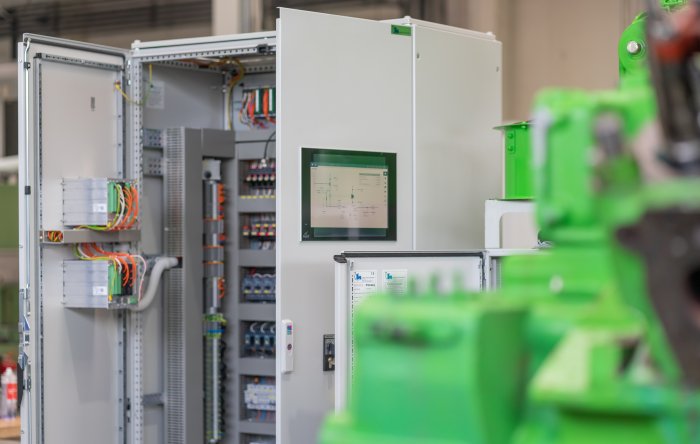
Here’s another PowerUP benefit: Our AORA and EDI control systems continuously provide documented operating data—exhaust gas temperatures, load profiles, oil pressures, and vibrations. This data isn’t just valuable for maintenance planning. It forms the basis for all documentation in energy audits, for ISO 50001 compliance, and for CHP subsidy applications. Anyone operating their engines with AORA or EDI has the data required by law—complete, automated, and audit-proof.
Here, digital motor control systems such as AORA (suitable for use in MWM® motors) or EDI become the decisive tool. They record consumption, efficiency, and emissions data in real time, store it in a tamper-proof manner, and make it available for reporting at the push of a button. Transparency is the best protection against unpleasant questions from the auditor.
We make your system audit-proof – with PowerUP
Compliance is not a necessary evil; it’s a mark of quality that builds trust with your customers. At PowerUP, we help you overcome the technical hurdles without getting lost in the maze of regulations.
Whether efficiency upgrades to comply with the EnEfG or EAG, emission kits for the BImSchV and FAV, or transparent data processing via AORA and EDI, we provide the necessary technology. Our solutions are suitable for use in Jenbacher®, MAN® and MWM® engines, among others. These are not original parts from the manufacturers mentioned.
We help you create the technical prerequisites to approach audits with confidence. Leverage technical compliance as your competitive advantage. Technology drives us; efficiency is our focus.